

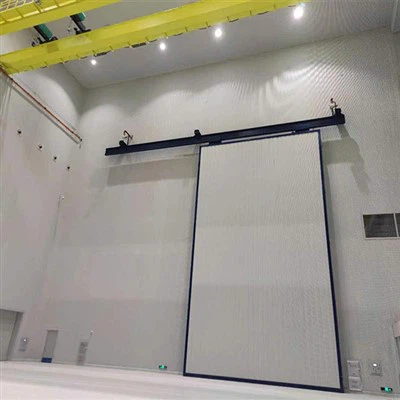
Shielding Door
What is Shielding Door
Shielded doors utilize radiation proof materials such as a lead lined core, covered by either wood or steel, to provide radiation protection in environments where radiation could cause serious harm.
Benefits of Shielding Door
Radiation-shielded doors help to protect against harmful electromagnetic radiation
Radiation shielded doors are an important part of nuclear shielding. Lead radiation shielding is used to help protect against harmful electromagnetic radiation. The lead helps to deflect the radiation away from the door and into the surrounding area. This helps to reduce the amount of radiation that is able to enter the door and exposure to the people inside. The doors are also designed to be as airtight as possible to help prevent the escape of radioactive materials. Radiation shielded doors are an important part of nuclear safety and help to protect against harmful radiation exposure.
Radiation-shielded doors are fire resistant
Radiation-shielded doors are absolutely essential in nuclear facilities. They are designed to block radiation from escaping, preventing contamination of the surrounding area. But radiation shielded doors are not only effective at blocking radiation – they are also fire resistant. This is because the materials used in nuclear shielding – lead and other metals – are extremely good at resisting heat. In fact, lead can withstand temperatures up to 1,000 degrees Celsius before it starts to melt. As a result, radiation shielded doors can provide an extra layer of protection in the event of a fire.
Radiation-shielded doors can help to reduce noise pollution
Radiation shielded doors can also help to reduce noise pollution in nuclear facilities. By trapping sound within the door, radiation shielded doors help to keep noise levels down and prevent the spread of noise pollution. This can be important in nuclear facilities where loud noises can cause safety and operational issues. Radiation shielded doors can help to reduce these problems by keeping the noise levels down.
Radiation-shielded doors are also impact resistant
Nuclear shielding materials are typically used in the nuclear industry for a variety of applications, including nuclear reactors, nuclear fuel processing plants, and nuclear waste disposal facilities. Lead is the most common type of nuclear shielding material, due to its high density and ability to absorb high-energy radiation. Lead is also relatively inexpensive and easy to work with, making it an ideal choice for many nuclear applications. However, lead is not the only option when it comes to nuclear shielding materials. Other options include boron-loaded polymers, which are often used in nuclear fuel processing plants, and concrete, which is often used in nuclear waste disposal facilities.
Radiation shielded doors offer a high level of security
Nuclear radiation shielded doors offer a high level of security for nuclear power plants and other nuclear facilities. These doors are made of lead, which is an excellent material for radiation shielding. Lead is very dense, so it can effectively block the passage of radiation. In addition, lead is non-reactive, so it will not interact with the nuclear materials that it is protecting against. As a result, radiation shielded doors provide an ideal solution for nuclear facility security.Radiation shielded doors are an important part of any business or organization that wants to protect its employees and property. Not only are they radiation and noise proof, but they are also fire and impact resistant. If you're looking for a high level of security, these doors are a great option. To learn more about the different features offered by radiation shielded doors, visit our website today.
-
![Shielding Automatic Door]()
Shielding Automatic Door
Shielding Automatic Door is an important entrance and exit channel for shielded rooms, and is suitable for all specifications of shielded rooms, micro, anechoic rooms, and partial discharge shieldedAdd to Inquiry -
![Emc Shielding Door]()
Emc Shielding Door
An Emc Shielding Door is a door designed to provide electromagnetic compatibility shielding. It has a special structure and material to block the propagation and interference of electromagneticAdd to Inquiry -
![EMI Shielding Door]()
EMI Shielding Door
Emi SHIELDING DOOR adopts special materials and structures, and its excellent electromagnetic shielding performance can effectively isolate and protect internal devices from external electromagneticAdd to Inquiry -
![EMI Shielded Door]()
EMI Shielded Door
EMI SHIELDed DOOR provides an effective barrier, which has the function of preventing electromagnetic waves from interfering with electronic equipment, and can effectively protect sensitiveAdd to Inquiry -
![Rf Shielding Door]()
Rf Shielding Door
RF SHIELDING DOOR is a door specially designed to block radio frequency signals. It uses materials and structures with high radio frequency shielding performance to isolate and block radio frequencyAdd to Inquiry -
![Rf Shielded Door]()
Rf Shielded Door
Made from premium stainless steel with high-conductivity gaskets, our RF Shielded Door ensures excellent shielding effectiveness, smooth operation, and long-lasting durability. Whether you need aAdd to Inquiry -
![Electromagnetic Shielding Door]()
Electromagnetic Shielding Door
The Electromagnetic Shielding Door adopts materials and structures with good electromagnetic shielding performance to block the propagation of external electromagnetic radiation and protect internalAdd to Inquiry -
![Rfi Shielded Doors]()
Rfi Shielded Doors
Design and manufacture standard and custom RFI Shielded Doors for EMI/RFI shielded rooms and Faraday cages. Materials and structures with high radio frequency shielding performance are used toAdd to Inquiry -
![Rfi Shielding Doors]()
Rfi Shielding Doors
Design and create standard and specialty RFI Shielding Doors for Faraday cages and EMI/RFI shielded rooms. In order to isolate and block radio frequency interference and shield the influence ofAdd to Inquiry




Why Choose us
Quality products
A good factory will produce high-quality products that meet the needs and expectations of customers.
Competitive pricing
A factory that offers fair and competitive pricing can help businesses save money and increase their profits.
Experienced team
An experienced team can help ensure that products are produced efficiently and effectively, minimizing errors and delays.
Quality of products or services
Customers want to ensure that the products or services they purchase are of high quality and will meet their needs. A company that consistently delivers high-quality products or services will have a good reputation and is likely to attract repeat customers.
Customer service
Excellent customer service is key to retaining customers. Companies that prioritize customer service are likely to gain customer loyalty and positive reviews.
Innovation
Companies that are innovative and stay ahead of the curve are likely to attract customers who value new and cutting-edge products or services.
Types of Shielding Door
1. Lead lined wood doors
Lead Lined Solid Core Wood Doors available in 10 standard lead thickness levels and many natural wood and plastic laminate veneers for swing or sliding door assemblies. Installation applications include Medical Diagnostic Imaging Rooms and Industrial Radiation Shielding Applications meeting NCRP reports #47 and #149
2. Lead lined hollow metal doors
Lead Lined Hollow Metal Doors available in 15 standard protective lead thickness levels in primed steel up to and including 90min UL fire ratings for swing or sliding door assemblies.Optional plastic laminate veneer faces. Installation applications for Radiation Oncology Cancer Therapy Radiation Rooms and Industrial or NDT X-Ray Gamma Radiation Shielding Applications meeting NCRP reports #47 and #149
3. Neutron shielded doors
Ray-Bar Neutron Shielded Doors with borated polyethylene and lead filled cores available swinging or sliding for shielding Thermal Neutrons or Fast Neutrons and High Energy X-Ray Gamma Radiation in Oncology Cancer Therapy Radiation Rooms and Linear Accelerators meeting NCRP reports#38, #51 and #79. These doors can weigh from 1,200 to 40,000 lbs per leaf depending on core requirements
4. Industrial sliding doors
Lead Lined Industrial Sliding Doors available in 15 standard lead thickness levels in primed steel or stainless steel with overhead track and hardware. Available single or bi-parting pairs. Installation applications for Industrial or NDT X-Ray Gamma Radiation Shielding
5. Accessories
Lead Shielded Door Sweeps, Lead Lined Locksets, Shielded Thresholds, Lead Lined Astragals, Light Proof Ventilation Louvers,Lead Lined Vision Frames with X-Ray Safety Glass, Shielded Peep-Hole View Ports and Pre-Formed Frame Lead Lining Kits
1. Anechoic chambers
Pyramidal absorbers are used in anechoic chambers to absorb the reflected signals and to prevent reflection from interfering with the desired signals. They are placed on the walls, ceiling, and floor of the chamber to create an environment with minimal reflection.
2. EMC testing
In EMC testing, pyramidal absorbers are used to reduce the amount of electromagnetic interference (EMI) and electromagnetic radiation that can affect the measurements. They are placed in the testing chamber to reduce reflections and scatter of electromagnetic waves.
3. Acoustic testing
Pyramidal absorbers are also used in acoustic testing to absorb sound and to create anechoic environments. They are commonly used in the automotive industry for testing the noise level of vehicles and in the construction industry for testing the acoustic properties of buildings.
4. Radar systems
Pyramidal absorbers are used to reduce interference between radar systems that may be operating in close proximity. This is accomplished by absorbing the energy from one radar system preventing it from interfering with another.
5. Medical imaging
Pyramidal absorbers are used in medical imaging to reduce reflections and to absorb stray signals. This helps to produce a clearer and more accurate image during MRI or CT scans.
Material of Shielding Door
Lead
Lead is a widely used material for radiation shielding due to its high atomic number and ability to absorb radiation. Shielding doors made of lead are typically heavy and may require additional support.
Tungsten
Similar to lead, tungsten is another heavy metal that is effective at blocking radiation. It is often used in combination with other materials for added shielding strength.
Steel
Steel doors with lead lining or other radiation-absorbing materials inside can provide effective protection against low to medium levels of radiation.
Concrete
Thick concrete doors can provide effective shielding against radiation in high-risk areas such as nuclear power plants.
Borated polyethylene
This is a lightweight material that contains boron, which is effective at absorbing radiation.
Ceramic tiles
These are hard, durable tiles that can be installed on shielded doors for additional protection against high levels of radiation.
Application of Shielding Door
Medical facilities
Shielding doors are used in hospitals and medical facilities to protect patients, doctors, and technicians from harmful radiation during medical procedures.
Laboratory facilities
Shielding doors are used in laboratory facilities where research is conducted on radioactive materials and other hazardous materials.
Nuclear power plants
Shielding doors are used in nuclear power plants to protect workers and the surrounding environment from radiation.
Aerospace industry
Shielding doors are used in aerospace facilities to protect sensitive electronic equipment from EMI.
Military facilities
Shielding doors are used in military installations to protect personnel and equipment from nuclear, biological, and chemical threats.
Data centers
Shielding doors are used in data centers to protect servers and other sensitive electronic equipment from EMI.
Shielding Door Weekly Checklist
Swing door
• Mag lock test to ensure lock secures room and unlocks properly
• Battery backup test to make sure battery is functional
• Localized power shut-off – test to make sure it functions properly
Slide door
• Mag lock test to ensure lock secures room and unlocks properly
• Battery backup test to make sure battery is functional
• Hand crank engage and operate door
• Reversing edges – test functionality
• Test presence sensor inside and out of room to ensure door reverses when the door is closing
Bi-Parting door
• Battery backup test to make sure battery is functional
1. Do
• Train annually
• Train new hires
• Keep door area clear of obstructions
• Maintain shielding door as recommended by manufacturer
• Perform daily and weekly safety checks
• Use proper procedures for opening and closing the door
2. Don't
• Don't modify door speeds
• Don't alter/modify safety sensors
• Don't use safeties to interrupt door functions
How to Install Shielding Door
Measure the doorway : Measure the doorway where the shielding door will be installed. The measurement should be taken based on the width, height, and depth of the doorway.
Purchase the shielding door : With the measurement taken, choose the shielding door that will perfectly fit the doorway. Ensure that the door comes with a frame, which will aid its installation.
Prepare the Installation site : Clear the installation site of any obstruction or debris that might hinder the installation process.
Install the door frame : First, install the door frame to the wall using the manufacturer's recommended method. This is a pre-installation requirement that must be done correctly to ensure that the door will fit properly.
Install the door : Once the frame is in position, install the shielding door in the frame. Fit it properly to ensure that it functions well and does not leave any gaps that could compromise the shielding capability.
Check the door alignment : After installing the door, check it for proper alignment and operation. The door should open and close smoothly and should be able to seal tightly when shut.
Test the door shielding : Test the shielding effectiveness of the door using appropriate methods, such as door sweep tests, to confirm that the installed door is indeed serving its intended shielding function.
Things to Note When Installing Screen Doors
● Ensure all cracks between the door and frame are properly sealed. Seal plays a critical role in RF Shielding; the seals are typically metal or electrically conductive fabric, allowing the current to transfer between the door and frame.
● Ensure frames are grounded via a cable and conductive bracket to ensure the energy transferring between the door and frame is effectively carried to the ground.
● Minimize the crack size. Low-frequency waves require larger cracks to pass through. Therefore the smaller the gap, the less energy will pass through the door.
Pick the right material for use. Material with similar conductivity allows current to flow more freely; when current flow is interrupted between the boundaries of two materials, the door can emit some energy like an antenna.
China Wuxi Anxin Shielding Equipment Co., Ltd. has a professional production workshop of 5000 square meters. We adheres to the policy of quality first and environmental protection first. In terms of quality, it has adopted three quality control checkpoints: raw material quality control, process quality control, and finished product quality control to ensure the consistency of product quality. We use high-quality CNC shearing machine, CNC bending machine and laser welding machine to make the product quality reach the world-class level.
In terms of environmental protection, we have invested in dust recovery equipment, exhaust gas absorption equipment and wastewater treatment equipment to meet national environmental protection requirements.


FAQ
Q: What are the basic concepts of radiation shielding?
Q: Does rubber stop radiation?
Q: Which type of shielding provides the best protection from radiation?
Q: Does lead stop all radiation?
Q: Does rain wash away radiation?
Q: How long does it take for radiation to dissipate?
Q: What is a shielding door?
Q: How much does a Series 44 shield room weigh?
Q: What are the benefits of using a shielding door?
Q: Where are shielding doors commonly used?
Q: Can a shielding door be customized?
Q: How do I choose the right shielding door for my facility?
Q: Are there any maintenance requirements for a shielding door?
Q: Are shielding doors expensive?
Q: Are shielding doors expensive?
Q: Can shielding doors be customized to fit specific needs?
Q: How long do shielding doors last?
Q: Are shielding doors easy to install?
Q: How do shielding doors work?
Q: What types of shielding doors are available?
As one of the most professional shielding door suppliers in China, we're featured by quality products and competitive price. Please rest assured to buy bulk discount shielding door for sale here and get quotation from our factory. Contact us for customized service.
Shielding Door, Electromagnetic Shielding Door, Cable Entry Panels