

EMI Filter
What is EMI Filter
EMI filters protect sensitive electronics from damage caused by high levels of radiation emitted by other electronic equipment. They extract unwanted current conducted through wiring or cables that can interfere with signal and power lines, while allowing desirable currents to flow without restriction.
Benefits of EMI Filter
Protection of equipment
EMI filters protect sensitive equipment from high-frequency noise that can cause malfunctions or damage. By reducing EMI, the filter can improve the longevity of the equipment.
Compliance with regulations
EMI filters are essential in industrial applications to comply with regulatory requirements. Many countries have strict EMI regulations, and non-compliance can lead to penalties or even a production line shutdown.
Improved system reliability
EMI filters can help improve the system's overall reliability by reducing EMI-related errors or malfunctions. This increased reliability can lead to lower maintenance and repair costs.
Improved Performance
EMI filters protect electronic devices, their circuits, and power sources from radiation emitted by other electronic devices. Consequently, the devices are protected from damage, and their performance is enhanced.
Radio Frequency Interference Protection
EMI filters are an effective solution to prevent unwanted interference from radiated or conducted sources. This is especially important in radio frequency devices.
Compliant with Regulatory Standards
EMI filters are necessary for compliance with regulatory standards. Many countries have strict regulations and standards designed to protect users and devices.
-
![EMI/rfi Power Line Filter]()
EMI/rfi Power Line Filter
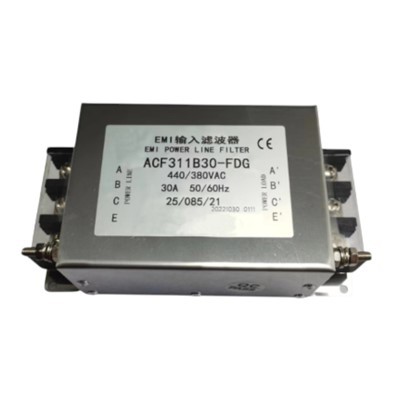
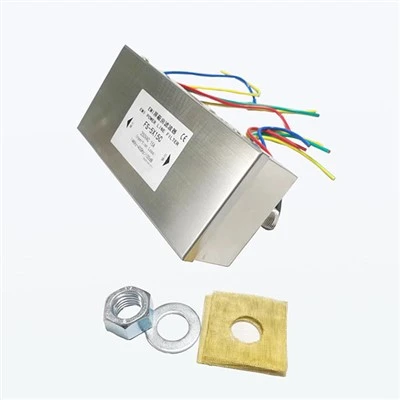
EMI/RFI Power Line filter is designed to filter high-frequency noise and interference signals in the power supply to provide a clean and stable power supply while reducing electromagneticAdd to Inquiry -
![Rfi Emc Filter]()
Rfi Emc Filter
RFI EMC Filter is a device used to suppress radio frequency interference and improve electromagnetic compatibility. RFI EMC Filter is mainly used to filter radio frequency interference signals toAdd to Inquiry -
![Ac Emc Filter]()
Ac Emc Filter
Ac Emc Filter is an electronic device used to filter or reduce noise, interference and harmonics in AC power. It is designed to suppress the interference of VFD input terminals to power grids andAdd to Inquiry -
![3 Phase Filter]()
3 Phase Filter
3 PHASE emc FILTER is a filter for three-phase AC power system, used to filter or reduce noise, interference and harmonics in the power supply. They are primarily used in three-phase power systems toAdd to Inquiry -
![3 Phase Emc Filter]()
3 Phase Emc Filter
They are primarily used in three-phase power systems to provide a stable, clean power supply and to protect equipment from power disturbances.Add to Inquiry -
![3 Phase Ac Filter]()
3 Phase Ac Filter
3 PHASE AC FILTER is a filter for three-phase AC power system to filter or reduce noise, interference and harmonics in the power supply.Add to Inquiry -
![Shielded Room Filters]()
Shielded Room Filters
Shielded Room Filters is an electromagnetic interference filter for shielded rooms, designed to provide a clean electromagnetic environment and protect indoor equipment from external interference.Add to Inquiry -
![2-line Filters]()
2-line Filters
2-line Filters are filters for power lines to filter out or reduce noise and interference signals on power lines. They are commonly used in electronic equipment and systems to provide a clean, stableAdd to Inquiry -
![4-line Filters]()
4-line Filters
4-line Filters are filters for power lines to filter out or reduce noise, interfering signals and harmonics on power lines.Add to Inquiry -
![Signal Line Filter]()
Signal Line Filter
Signal line Filter is an electronic device used to filter or reduce noise and interference signals on signal lines. They are mainly used to protect signal transmission lines and ensure the accuracyAdd to Inquiry





Why Choose us
Quality products
A good factory will produce high-quality products that meet the needs and expectations of customers.
Competitive pricing
A factory that offers fair and competitive pricing can help businesses save money and increase their profits.
Experienced team
An experienced team can help ensure that products are produced efficiently and effectively, minimizing errors and delays.
Quality of products or services
Customers want to ensure that the products or services they purchase are of high quality and will meet their needs. A company that consistently delivers high-quality products or services will have a good reputation and is likely to attract repeat customers.
Customer service
Excellent customer service is key to retaining customers. Companies that prioritize customer service are likely to gain customer loyalty and positive reviews.
Innovation
Companies that are innovative and stay ahead of the curve are likely to attract customers who value new and cutting-edge products or services.
What causes industrial EMI Filter
Electric motors and generators
Electric motors and generators can produce a large amount of high-frequency noise and sometimes operate on a continuous cycle for uninterrupted power in factories and manufacturing plants.
Cellular networks and telephone transmissions
Both wired and wireless telecommunications produce EMI filter. As the cellular grid continues to grow and more consumers use cell phones, the noise from cell networks becomes a more severe threat to other electronics and devices.
Television transmissions
Like cellular transmissions, television transmissions can also cause EMI to residential and industrial devices.
Radio and satellite
Radio and satellite waves transmitted across the country can cause interference with cellular networks or with sensitive equipment.
Grid power
Transmission lines in the electrical grid often have high voltage and low frequencies that can disrupt certain electronics. Disruptions in grid power — such as voltage surges, voltage dips or spikes, blackouts, and brownouts — can also result in electromagnetic interference in devices and equipment connected to grid power.
Railroads and mass transportation systems
Operating systems for trains and mass transportation can produce EMI from their propulsion system, signaling systems, control systems, and other processes. These systems operate at high voltages and currents that can impact other transportation system components or electrical devices in facilities located near railroads.
Medical equipment
Many technologies in the medical field can produce EMI, including life support, X-ray equipment, MRIs, electrical surgical units, telemetry units, and other assistance equipment. EMI from medical equipment can cause the devices themselves to malfunction or can interfere with other medical technology.
Other high-frequency sources of EMI
Many industrial processes produce high-frequency EMI filter from components such as transmitters, transformers, inverters, microprocessors, and controls.
What are the Residential Effects of EMI Filter
Disruptions to wireless devices
EMI filter can cause bad cell phone reception or poor performance of mobile devices. Wi-Fi and Bluetooth devices may experience reliability issues that can be frustrating to everyday life.
Malfunction of computers
Small EMI filter disruptions to computers can cause monitor flicker or poor performance, whereas a considerable interruption like a power surge could cause the computer to crash, resulting in data loss or permanent damage to the computer's hard drive.
Damage to large appliances
EMI filter can have the biggest impact on major home appliances like washing machines, dryers, refrigerators, dishwashers, and microwaves. Even home heating and cooling systems can be susceptible to damage from EMI. When noise interferes with these appliances, it can cause malfunctions and permanent damage to the electrical circuit.
Disruptions to other residential devices
Almost any electronic or electrical device may be subject to damage from EMI filter, including smaller home devices such as blenders, mixers, vacuum cleaners, and electric power tools.
What are the Industrial Effects of EMI Filter
Disruption in television, radio, and telecommunications
When EMI filter impacts satellite performance, it can result in abnormal noises in radio transmissions or disrupted video in television transmissions. This effect is particularly evident in areas with weaker radio or telephone signals. If EMI impacts telecommunications, it can lead to poor reception or unreliable service.
Failure of hospital equipment
Many types of medical equipment are vulnerable to electromagnetic noise and can easily malfunction if unshielded from EMI filter. Life support equipment monitors weak body signals, making it highly susceptible to damage or failure from EMI. Devices like pacemakers and hearing aids can also malfunction or fail due to EMI. Failure of hospital equipment can lead to death or other severe consequences.
Failure of military equipment
Mission-critical military equipment can fail because of ambient EMI or disruptions to its power supply. It is, therefore, essential to protect military equipment from high-powered electromagnetic pulse (HEMP) threats, a form of weaponized EMI. HEMP threats and other sources of EMI can cause the loss of sensitive data or disrupt military communications or operations.
EMI Filter Applications
Appliances and washing machines
White goods EMI filters suppress electromagnetic noise for a variety of home appliances from washing machines to treadmills. These filters ensure devices meet electromagnetic compatibility regulations and help protect them from EMI damage that can impact their performance.
01
Single-phase
Single-phase EMI filters are effective for smaller equipment, such as home appliances and electronics, as well as industrial applications, such as food service equipment, power supplies, and telecommunications. A single-phase EMI filter can also be compatible with fitness equipment and motor controls.
02
Three-phase
For more stringent EMI suppression, three-phase EMI filters can block higher levels of noise through a three-stage filtering system. Three-phase EMI filters are for use in high-power applications such as industrial machinery and motors, medical equipment, test equipment, and industrial tools.
03
Military
EMI filters for military applications specifically meet regulations and compliance standards for EMC of military devices. These reliable EMI filters protect against damage to aerospace and military communication systems for secure operations. EMI filters designed for HEMP protection are also available to protect against EMI threats.
04
Medical-grade EMI filters
Medical-grade EMI filters meet current requirements for medical applications and protect sensitive medical equipment from damage. EMI filters for MRI rooms are purpose-built to create a secure test chamber free of EMI from lighting, intercoms, and other sources of outside noise. Effective and reliable EMI filters for medical applications can be life-saving protection against electromagnetic noise interference.
05
Key Parameters for Selecting EMI Filters
Frequency range
The frequency range of the EMI filter must be compatible with the frequency range of the equipment it is protecting.
Insertion loss
Insertion loss is the amount of signal attenuation caused by the filter. The insertion loss must be low enough not to impact the performance of the equipment.
Rated current
The rated current represents the maximum current that an EMI filter can effectively handle. It is essential to select an EMI filter with a rated current that matches the equipment it is protecting.
Rated voltage
Maximum safe operating level for effective electromagnetic interference suppression, safeguarding electronic devices from unwanted interference. Crucial for device protection.
Mounting
Mounting is the installation of EMI filters on electronic devices to reduce electromagnetic interference, ensuring smooth device operation. Proper mounting enhances filter effectiveness, safeguarding sensitive components from unwanted electromagnetic noise.
Connection terminals
The connection terminal in an EMI filter is the interface that allows the filter to link with the electronic circuit, capturing and suppressing electromagnetic noise to protect sensitive components and ensure device functionality. It consists of input and output connections for power and signal lines.
How to Choose an EMI Filter
Input voltage
Single-phase EMI filters are rated for 250 VAC and work with any AC voltage below that. Three phase filters are rated for 480 VAC. Some single-phase filters have ratings of 277 VAC up to 300 VAC for higher voltage applications.
Current rating
Current requirements range from less than 1 amp to over 1000 amps. The current rating is the maximum steady state current an EMI filter is designed to carry within its safety temperature range. It should be equal to or higher than the maximum input current a device will draw. Most filters can handle higher in rush current but fail if the rated current is exceeded for an extended period of time.
Temperature
The temperature for a system takes two forms, which are ambient and operating. The ambient temperature is the highest temperature at which a filter can carry its full current. In most cases, it is between 40°C or 50°C. If the operating temperature is higher than the ambient temperature for the filter, the current must be derated.The operating temperature is the temperature where the filter can safely operate, which can be, for most filters, -25°C to 85°C or 100°C. The operating temperature has to fall within this range since using a filter outside this range can damage components.
Leakage current
Leakage current flows from the line and neutral to ground when line voltage is applied to the filter and is caused by line to ground capacitor in the filter. EMI filters with Y capacitors add leakage current on top of a device's contribution. Regulations limit the amount of leakage current and have regulatory safety standards that must be strictly followed.
Power system
Power systems vary from one country to another and come in special configurations apart from single phase, 3 phase delta, and 3 phase wye configurations. EMI filters are designed for single phase, 3 phase delta, 3 phase wye, and DC circuits but can be used in other systems with minimal adjustments. As may be expected, the input power supply type must be identified and match the selected filter.
Stages
The number of stages is in reference to the number of circuit repetitions, in a series, in the filter. Single stage filters have one circuit. When circuits repeat, the filters become dual and more stage filters. The performance of a filter improves as the stages increase.
High potential (Hipot)
The hipot test tests the dielectric strength of the insulation and is the application of DC voltage between the line and ground, which determines the weak points in the insulation or manufacturing defects. The applied high voltage is the rated voltage as specified by safety agencies. Depending on the application, hipot requirements may be higher and require filter adjustments.
Size
EMI filters are available in a wide range of sizes, performance levels, interconnections, and mounting types. In some cases, it is necessary to custom design a filter to meet the needs of an application.
Equipment type
The type of equipment and its components are a crucial aspect in the selection of an EMI filter. AC/DC converters, manufacturing equipment, medical devices, RF modules, and other types of equipment necessitate the use of an EMI filter that fits the nature of the application. Clock frequencies and switching frequencies affect the emission profile of an EMI filter.
Types of EMI Filter
1. Single-stage EMI filter
A simple EMI filter consisting of a single L-C circuit that attenuates noise in a limited frequency range.
2. Two-stage EMI filter
A more complex EMI filter consisting of two L-C circuits that attenuate noise in a wider frequency range.
3. Common-mode EMI filter
This type of EMI filter is used to suppress electrical noise that is generated on both the power line and ground.
4. Differential-mode EMI filter
This type of EMI filter is used to suppress electrical noise that is generated on the power line only.
5. Low-pass EMI filter
A type of EMI filter that attenuates high-frequency noise and passes low-frequency signals.
6. Band-pass EMI filter
A type of EMI filter that attenuates noise outside a specific frequency band, while allowing signals within that band to pass.
7. Active EMI filter
A type of EMI filter that uses active components, such as operational amplifiers, to amplify and filter the signal.
8. Passive EMI filter
A type of EMI filter that uses only passive components, such as inductors, capacitors, and resistors, to filter the signal.
9. Pi filter
A type of EMI filter that uses a combination of capacitors and inductors to attenuate noise in a broad frequency range.
10.High-pass EMI filter
A type of EMI filter that attenuates low-frequency noise and passes high-frequency signals.
China Wuxi Anxin Shielding Equipment Co., Ltd. has a professional production workshop of 5000 square meters. We adheres to the policy of quality first and environmental protection first. In terms of quality, it has adopted three quality control checkpoints: raw material quality control, process quality control, and finished product quality control to ensure the consistency of product quality. We use high-quality CNC shearing machine, CNC bending machine and laser welding machine to make the product quality reach the world-class level.
In terms of environmental protection, we have invested in dust recovery equipment, exhaust gas absorption equipment and wastewater treatment equipment to meet national environmental protection requirements.


FAQ
Q: What are the basics of EMI filter design
Q: Can an EMI filter go bad?
Q: How does EMI filter works?
Q: Where should I place my EMI filter?
Q: How does an EMI filter fail?
Q: What are the 4 basic filters?
Q: Are EMI filters bidirectional?
Q: Why do we use EMI filter?
Q: How are EMI filters classified?
Q: What are the characteristics of EMI filter?
Q: How to detect EMI interference?
Q: What is the difference between EMI filter and EMC filter?
Q: Do I need an EMI filter?
Q: How to wire an EMI filter?
Q: How do I choose an order of filters?
Q: What is filter choke?
Q: Is an EMI filter a capacitor?
Q: What is EMI filter RFI?
Q: What is an active EMI filter?
Q: What is the lifespan of a filter?
As one of the most professional emi filter suppliers in China, we're featured by quality products and competitive price. Please rest assured to buy bulk discount emi filter for sale here and get quotation from our factory. Contact us for customized service.
emi filter for low-frequency emi filter, Acoustic Shielded Door, Shielded Door