

Honeycomb Material
Wuxi Anxin Shielding Equipment Co., Ltd. is a professional manufacturer specializing in the production of EMI shielding rooms, EMI anechoic chambers, and high-voltage partial discharge testing halls. The company holds a safety production license and is qualified for electrical and mechanical installation projects. We focus on the research, design, development, and application of EMI shielding rooms and related products.
-
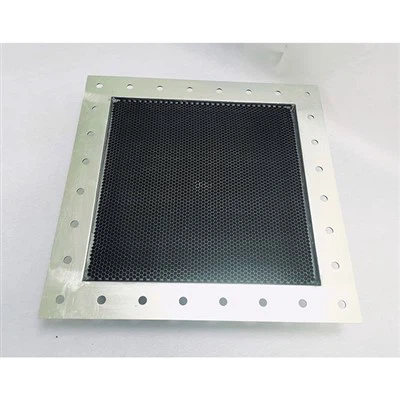
![Stainless Steel Honeycomb Vent]()
Stainless Steel Honeycomb Vent
Stainless Steel Honeycomb Vent is a special window structure used in radio frequency (RF) and microwave systems. It is constructed of stainless steel with a honeycomb structure for ventilation andAdd to Inquiry -
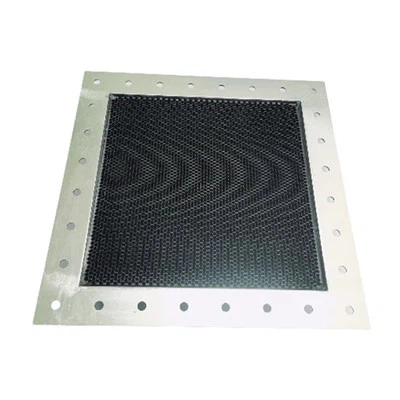
![Honeycomb Core]()
Honeycomb Core
Honeycomb Core is a special window structure for radio frequency (RF) and microwave systems. It is made of stainless steel with a honeycomb structure for ventilation and waveguides.Add to Inquiry -
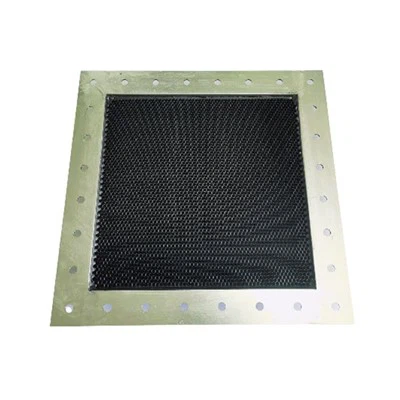
![Honeycomb Panel]()
Honeycomb Panel
Honeycomb Panel is a special window structure used in radio frequency (RF) and microwave systems. Made of stainless steel with excellent electrical conductivity and corrosion resistance, it has aAdd to Inquiry -
![Honeycomb Ventilation Panel]()
Honeycomb Ventilation Panel
The Honeycomb Ventilation Panel is specially designed to provide excellent airflow while maintaining strong electromagnetic shielding performance. It’s the perfect solution for applications thatAdd to Inquiry -
![EMI Steel Honeycomb Vent]()
EMI Steel Honeycomb Vent
EMI Steel Honeycomb Vent is a special window structure used in radio frequency (RF) and microwave systems. EMI Steel Honeycomb Vent is made of stainless steel, has a honeycomb structure, providesAdd to Inquiry


Why choose us?
Products application
The products are widely used in the fields of party and government, industry and mining, scientific research, education, aerospace and so on.
Our equipment
We use high-quality CNC shearing machine, CNC bending machine and laser welding machine to make the product quality reach the world-class level.
Our products
The company have independently researched and developed products such as assembled shielding room, welded shielding room, partial discharge testing hall and various emi shielded doors.
High quality
The products strictly implement different levels of construction and testing standards such as GB12190, GJB20219, SJ31470 and BMB, and have been tested by the national authority.
Types of Honeycomb Material:

Aluminum honeycombs:
Aluminum honeycombs possess the highest strength and weight ratio and have a mixture of geometric cell shapes and by foil thickness and cell size, the properties are controlled.
If applied in some applications such as marine structures, aluminum honeycombs are at risk of corroding, and upon impact, with a cored laminate this type of honeycomb deforms irreversibly.
Nomex honeycombs:
Nomex honeycombs are manufactured by a type of paper-based on Kevlar fibers which is known as Nomex paper and with fire-resistant properties, these honeycomb cores combine high strength.
In aircraft interior panels as well as in other high-performance components these are used and due to their low density, solid stability, and mechanical strength, they are preferred. As compared to other materials they are more expensive.
Thermoplastic honeycombs:
These honeycombs cores are easily recyclable and are lightweight and there are several types of these honeycombs such as;
ABS offers surface hardness, toughness, rigid structure, dimensional stability, and impact resistance.
Polycarbonate offers good light transmission, UV stability, self-extinguishing properties, and robust heat resistance.
Polypropylene provides exceptional chemical resistance
Polyethylene is an inexpensive general-purpose core material.
Stainless steel honeycombs:
For hostile environments, stainless steel honeycombs cores are ideal and in train doors and floors, bulkheads, and other areas these are used.

Benefits of Honeycomb Material:
Strength-to-weight ratio
One of the most significant advantages of honeycomb structures is their exceptional strength-to-weight ratio. This characteristic makes honeycomb panels an excellent choice for applications where weight is a critical factor. For instance, in aerospace and automotive industries, reducing weight without compromising strength can lead to substantial improvements in fuel efficiency and performance.
Detailed analysis of strength
The strength of a honeycomb structure comes from its geometry. The hexagonal cells provide multiple load paths and distribute force evenly across the structure. This distribution reduces the likelihood of failure under stress, making honeycomb structures particularly resilient.
Weight reduction benefits
The lightweight nature of honeycomb structures translates to numerous benefits. For example, in aerospace, lighter components lead to reduced fuel consumption, lower emissions, and improved payload capacity. In the automotive industry, lighter vehicles offer better fuel efficiency and handling.
Flexibility
Honeycomb structures can be adapted into various shapes and sizes. They offer tremendous flexibility in design. This adaptability makes them suitable for a wide range of architectural applications, from detailed interior designs to expansive structural elements.
Customization and design freedom
The modular nature of honeycomb structures allows for easy customization. Architects can design panels that fit specific dimensions and shapes to enable complex architectural forms. This flexibility also extends to the choice of materials, finishes, and surface treatments for a wide range of aesthetic and functional possibilities.
Energy efficiency
The insulating properties of honeycomb structures contribute significantly to energy efficiency. The hexagonal cells trap air to provide excellent thermal insulation. This characteristic makes honeycomb panels ideal for use in building envelopes and reduces the need for additional insulation materials. This can lead to more energy-efficient buildings.
Thermal insulation properties
The hexagonal cells of honeycomb structures create numerous air pockets, which act as insulators. This design minimizes heat transfer, keeping interiors warm in winter and cool in summer. As a result, buildings with honeycomb panels require less energy for heating and cooling, leading to lower utility bills and reduced environmental impact.
Acoustic insulation
In addition to thermal insulation, honeycomb structures also provide excellent acoustic insulation. The cells absorb and dissipate sound waves, reducing noise transmission between spaces. This property makes honeycomb panels ideal for use in office buildings, concert halls, and residential complexes where sound control is essential.
Application of Honeycomb Material:
Aerospace and aviation
The aerospace industry relies heavily on industrial honeycomb structures for manufacturing aircraft parts. Components like wings, fuselages, and engine nacelles use honeycomb cores made of metals or composites. These cores are lightweight yet strong enough to endure extreme pressure and temperature changes.
Automotive industry
Honeycomb structures are commonly used in automotive applications, particularly in crash absorption zones and lightweight body panels. The durable design improves fuel efficiency by reducing vehicle weight while enhancing safety.
Construction and building materials
In construction, honeycomb panels are used for flooring, walls, and roofing. Their lightweight nature makes them easy to transport and install, while their strength ensures long-term durability.
Environmental technologies
The ceramic honeycomb structure plays a significant role in environmental solutions, such as air purification and water treatment. These structures offer a large surface area for filtration processes, making them highly efficient in trapping pollutants.
Certificate:

Partners:


FAQ
As one of the most professional honeycomb material suppliers in China, we're featured by quality products and competitive price. Please rest assured to buy bulk discount honeycomb material for sale here and get quotation from our factory. Contact us for customized service.
EMI Power Line Filters, Feedthrough Filter, Honeycomb Waveguide Vent