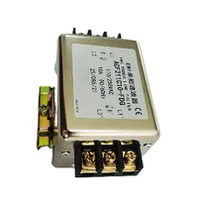
As a supplier of 4 - line Filters, I often get asked about the lifespan of these nifty little devices. So, let's dive right in and explore what affects the lifespan of 4 - line Filters and how long you can expect them to last.
What are 4 - line Filters?
Before we talk about their lifespan, let's quickly go over what 4 - line Filters are. These filters are designed to reduce the amount of electromagnetic interference (EMI) and radio - frequency interference (RFI) in electrical circuits. They've got four lines, usually used to handle different phases and neutrals in electrical systems. They're super important in a bunch of applications, from industrial machinery to consumer electronics. You can check out some related products on our website, like Shielded Room Filters, Rfi Emc Filter, and 3 Phase Filter.
Factors Affecting the Lifespan of 4 - line Filters
1. Operating Environment
The environment where the 4 - line filter is used plays a huge role in how long it'll last. For starters, temperature is a big deal. If the filter is operating in a high - temperature environment, let's say above 60 degrees Celsius, the components inside can start to degrade faster. Heat causes the materials to expand and contract, which can lead to mechanical stress and eventually, component failure.
Humidity is another factor. High humidity can cause corrosion on the filter's metal parts. If moisture gets inside the filter, it can short - circuit the internal components or cause the insulation to break down. So, if the filter is in a damp place, like a basement or near a water source, its lifespan is likely to be shorter.
Dust and debris can also be problematic. If a lot of dust accumulates on the filter, it can block the ventilation holes, causing the filter to overheat. And if there are particles that conduct electricity, they can cause short - circuits.
2. Electrical Load
The amount of electrical load the filter has to handle is crucial. If the filter is constantly operating at or near its maximum rated current, it'll wear out faster. The components inside, like the capacitors and inductors, have to work harder to filter out the interference. Over time, this extra stress can cause the components to fail.
For example, if you've got a 4 - line filter rated for 10 amps, but you're constantly pushing 9 or 10 amps through it, it won't last as long as if you were only using 5 amps. It's like running a car at full speed all the time; it'll wear out the engine faster.
3. Quality of Components
The quality of the components used in the 4 - line filter makes a big difference in its lifespan. High - quality capacitors and inductors are made with better materials and have more precise manufacturing processes. They can handle higher temperatures, voltages, and currents without degrading as quickly.
Cheaper filters might use lower - quality components to keep the cost down. But these components are more likely to fail earlier, especially under harsh operating conditions. So, when you're choosing a 4 - line filter, it's worth spending a bit more on a high - quality one.


4. Maintenance
Regular maintenance can significantly extend the lifespan of a 4 - line filter. This includes things like cleaning the filter to remove dust and debris, checking for loose connections, and testing the filter's performance periodically.
If you notice any signs of damage, like burnt components or a change in the filter's performance, it's important to address the issue right away. Ignoring these signs can lead to complete filter failure and potentially damage other parts of the electrical system.
Typical Lifespan of 4 - line Filters
So, how long can you expect a 4 - line filter to last? Well, it's hard to give an exact number because it depends on all the factors we just talked about. But in general, if the filter is used in a normal operating environment, with a reasonable electrical load, and with proper maintenance, it can last anywhere from 5 to 15 years.
In a well - controlled industrial environment, where the temperature and humidity are regulated, and the electrical load is within the filter's rated capacity, a high - quality 4 - line filter might last 10 to 15 years. On the other hand, in a harsh environment, like a hot and dusty factory floor, with a high electrical load and minimal maintenance, the filter might only last 5 to 7 years.
Extending the Lifespan of 4 - line Filters
If you want to make your 4 - line filter last as long as possible, here are some tips:
- Choose the Right Filter: Make sure you select a filter with the right specifications for your application. Don't overload the filter; choose one with a higher rated current than you actually need.
- Control the Environment: Try to keep the operating environment as stable as possible. Use air - conditioning to control the temperature and dehumidifiers to reduce humidity. Keep the area around the filter clean and dust - free.
- Regular Maintenance: Set up a maintenance schedule to clean the filter, check the connections, and test its performance. Replace any worn - out components as soon as you notice a problem.
Conclusion
The lifespan of 4 - line Filters can vary widely depending on the operating environment, electrical load, component quality, and maintenance. As a supplier, we're here to help you choose the right filter for your needs and give you advice on how to make it last.
If you're in the market for 4 - line Filters or have any questions about their lifespan or performance, don't hesitate to reach out. We're always happy to have a chat and discuss your specific requirements for a potential purchase. Let's work together to find the best solution for your EMI and RFI filtering needs.