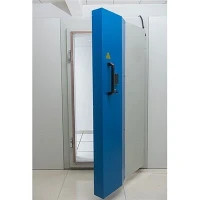
As a supplier of EMI shielded doors, ensuring the long - term reliability of these doors is not only a technical challenge but also a commitment to our customers. In this blog, I will share some key strategies and considerations on how to achieve this goal.
Understanding the Basics of EMI Shielded Doors
EMI (Electromagnetic Interference) shielded doors are designed to prevent the leakage of electromagnetic waves in and out of a specific area. They are widely used in various industries, such as telecommunications, aerospace, and medical facilities, where electromagnetic compatibility is crucial. The effectiveness of an EMI shielded door depends on several factors, including the quality of the shielding materials, the design of the door structure, and the installation process.
Quality of Shielding Materials
The choice of shielding materials is fundamental to the long - term reliability of an EMI shielded door. High - quality materials with excellent conductivity and magnetic permeability are essential. For example, copper and aluminum are commonly used due to their good electrical conductivity. Copper has a high conductivity of about 5.96×10⁷ S/m, which allows it to effectively conduct and redirect electromagnetic waves. Aluminum, on the other hand, is lighter and more cost - effective, with a conductivity of around 3.77×10⁷ S/m.


In addition to the base materials, the shielding effectiveness can be enhanced by using special coatings. For instance, nickel - silver coatings can improve the corrosion resistance of the shielding surface, ensuring that the shielding performance remains stable over time. At our company, we carefully select materials that meet strict quality standards to ensure the long - term reliability of our EMI Shielded Door.
Design of the Door Structure
The design of the EMI shielded door structure also plays a vital role in its long - term reliability. A well - designed door should have a tight seal to prevent electromagnetic leakage. The use of gaskets is a common method to achieve this. Gaskets made of conductive materials, such as conductive rubber or metal mesh, can fill the gaps between the door and the frame, creating a continuous electrical path.
Moreover, the door should be designed to withstand normal wear and tear. For example, the hinges and locks should be strong enough to support the weight of the door and ensure smooth operation. We pay great attention to the structural design of our doors, using advanced CAD software to optimize the design and ensure that every component works together seamlessly.
Installation and Maintenance
Professional Installation
Proper installation is crucial for the long - term reliability of an EMI shielded door. A professional installation team should be involved to ensure that the door is installed correctly. During the installation process, the alignment of the door and the frame is critical. Any misalignment can lead to gaps, which will reduce the shielding effectiveness.
Our company provides professional installation services, and our technicians are trained to follow strict installation procedures. They use precision tools to ensure that the door is installed accurately, and they also conduct thorough testing after installation to ensure that the shielding performance meets the requirements.
Regular Maintenance
Regular maintenance is necessary to keep the EMI shielded door in good working condition. Maintenance tasks include cleaning the door surface, checking the gaskets for damage, and lubricating the hinges and locks. Cleaning the door surface can remove dust and dirt, which may affect the conductivity of the shielding materials. Checking the gaskets regularly can help detect any signs of wear or damage, and replacing them in a timely manner can prevent electromagnetic leakage.
We provide detailed maintenance guidelines to our customers and offer maintenance services upon request. By following these maintenance procedures, the long - term reliability of the EMI shielded door can be significantly improved.
Testing and Certification
In - house Testing
Before the EMI shielded door is delivered to the customer, it undergoes a series of in - house tests. These tests include shielding effectiveness testing, mechanical performance testing, and environmental testing. Shielding effectiveness testing measures the ability of the door to block electromagnetic waves at different frequencies. Mechanical performance testing evaluates the strength and durability of the door structure, such as the load - bearing capacity of the hinges and the locking mechanism. Environmental testing assesses the performance of the door under different environmental conditions, such as temperature, humidity, and vibration.
Our company has a well - equipped testing laboratory, where we use advanced testing equipment to ensure the accuracy and reliability of the test results. Only when the door passes all the tests can it be considered qualified for delivery.
Third - party Certification
In addition to in - house testing, obtaining third - party certification is also important for demonstrating the long - term reliability of the EMI shielded door. Third - party certification provides an independent assessment of the door's performance and compliance with relevant standards. For example, certifications such as ISO 9001 and UL 10C can ensure that the door meets international quality and safety standards.
We actively seek third - party certifications for our products to provide our customers with more confidence in the long - term reliability of our EMI shielded doors.
Continuous Improvement
The field of EMI shielding technology is constantly evolving, and we are committed to continuous improvement. We invest in research and development to explore new materials and technologies that can enhance the performance and reliability of our EMI shielded doors. For example, we are currently researching the use of nanomaterials to improve the shielding effectiveness and reduce the weight of the doors.
We also collect feedback from our customers to understand their needs and concerns. Based on this feedback, we make improvements to our products and services. By continuously improving our products, we can ensure that our EMI shielded doors remain reliable in the long run.
Conclusion
Ensuring the long - term reliability of an EMI shielded door requires a comprehensive approach that includes the selection of high - quality materials, proper design, professional installation, regular maintenance, testing, and continuous improvement. As a supplier of EMI Shielded Door, Shielding Automatic Door, and Rf Shielding Door, we are dedicated to providing our customers with reliable products and excellent services.
If you are interested in our EMI shielded doors or have any questions about ensuring their long - term reliability, please feel free to contact us for procurement and further discussions.