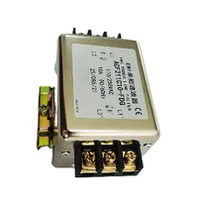
Hey there! As a supplier of 3 PHASE FILTERS, I often get asked about the difference between a 3 PHASE FILTER and a single - phase filter. So, I thought I'd write this blog to break it all down for you in simple terms.
Let's start with the basics. A filter, in the electrical world, is a device that allows certain frequencies to pass through while blocking others. This is super important in electrical systems because it helps to reduce interference and noise, ensuring that your equipment runs smoothly and efficiently.
Single - phase Filters
First up, single - phase filters. These are designed for use in single - phase electrical systems. Most of the time, you'll find them in residential and small commercial applications. Think about your home appliances like your fridge, TV, or washing machine. They all operate on single - phase power.
Single - phase power has just one alternating current (AC) waveform. It's a straightforward setup where the voltage and current vary sinusoidally over time. A single - phase filter is relatively simple in design. It usually has two or three wires: one for the live conductor, one for the neutral conductor, and sometimes a ground wire.
The main job of a single - phase filter is to clean up the electrical signal in a single - phase circuit. It can reduce electromagnetic interference (EMI) and radio - frequency interference (RFI) that might be coming from the power source or being generated by the device itself. For example, if you have a noisy power supply in your home, a single - phase filter can help to smooth out the electrical signal and prevent your electronics from getting jittery or malfunctioning. You can check out Signal Line Filter for more info on filters that can be used in single - phase setups to deal with signal - related interference.


3 PHASE FILTERS
Now, let's talk about 3 PHASE FILTERS. These are used in three - phase electrical systems, which are commonly found in industrial and large commercial applications. Three - phase power is a bit more complex than single - phase power. It consists of three AC waveforms that are out of phase with each other by 120 degrees.
Three - phase systems are used because they can deliver more power more efficiently. Industrial machines, large motors, and commercial HVAC systems often rely on three - phase power to operate. And that's where 3 PHASE FILTERS come in.
A 3 PHASE FILTER is designed to handle the three - phase power flow. It has a more complex design compared to a single - phase filter. It typically has multiple input and output terminals to deal with the three phases and the neutral (if present). The main function of a 3 PHASE FILTER is similar to that of a single - phase filter: to reduce EMI and RFI. But because of the higher power levels and more complex electrical environment in three - phase systems, 3 PHASE FILTERS need to be more robust and have higher current - handling capabilities.
For instance, in a factory where there are a lot of heavy - duty machines running on three - phase power, these machines can generate a lot of electrical noise. A 3 PHASE FILTER can help to keep that noise in check, preventing it from interfering with other equipment in the facility. If you're interested in the specific 3 PHASE FILTER options we offer, you can take a look at 3 Phase Emc Filter.
Key Differences
1. Power Handling
The most obvious difference is the power - handling capacity. Single - phase filters are designed for lower power applications, usually up to a few kilowatts. In contrast, 3 PHASE FILTERS can handle much higher power levels, sometimes reaching hundreds of kilowatts or even more. This is because three - phase systems are used for large - scale operations where a lot of power is required.
2. Design Complexity
As mentioned earlier, 3 PHASE FILTERS are more complex in design. They need to deal with three separate phases, which means more components and a more intricate circuit layout. Single - phase filters, on the other hand, have a simpler design since they only have to deal with one phase.
3. Application
Single - phase filters are mainly used in residential and small - scale commercial settings. 3 PHASE FILTERS, however, are essential in industrial and large - commercial applications such as factories, data centers, and large office buildings.
4. Cost
Generally, 3 PHASE FILTERS are more expensive than single - phase filters. This is due to their higher power - handling capabilities, more complex design, and the need for more robust components.
When to Choose Which
If you're working on a small project like setting up a home office or a small workshop, a single - phase filter will probably do the job. It's cost - effective and suitable for the lower power requirements of these applications.
But if you're involved in an industrial project, a large commercial building, or any application that uses three - phase power, a 3 PHASE FILTER is a must. Without it, you risk having electrical interference that can damage your equipment, cause malfunctions, and even lead to safety hazards. And if you're dealing with radio - frequency interference in either single - phase or three - phase systems, you might want to check out Rfi Emc Filter.
Conclusion
In conclusion, understanding the difference between a 3 PHASE FILTER and a single - phase filter is crucial when it comes to choosing the right filter for your electrical system. Whether you're a DIY enthusiast working on a home project or an engineer in charge of a large industrial facility, making the right choice can save you a lot of headaches in the long run.
If you're in the market for a 3 PHASE FILTER or have any questions about which filter is right for your application, don't hesitate to reach out. We're here to help you find the perfect solution for your needs. Let's get your electrical system running smoothly and efficiently!
References
- Electrical Engineering textbooks on power systems and filters
- Industry standards and guidelines for EMI/RFI filters