

Hey there! As an EMI filter supplier, I've seen firsthand the importance of designing effective EMI filters. In this blog post, I'm gonna share some tips on how to design an EMI filter that suits your specific needs.
Understanding EMI
Before we dive into the design process, let's quickly go over what EMI is. EMI, or electromagnetic interference, is the disturbance that affects an electrical circuit due to either electromagnetic induction or electromagnetic radiation emitted from an external source. It can cause all sorts of problems, like malfunctions in electronic devices, reduced performance, and even safety hazards.
Step 1: Identify the Requirements
The first step in designing an EMI filter is to figure out what your requirements are. You need to know things like the frequency range of the interference you're trying to block, the level of attenuation needed, and the electrical characteristics of the circuit where the filter will be installed.
For example, if you're dealing with a power supply that's being affected by high - frequency noise, you'll want to design a filter that can effectively block those high - frequency signals. On the other hand, if it's a low - frequency interference, your filter design will be different.
Step 2: Choose the Right Filter Topology
There are several types of filter topologies available, and the choice depends on your requirements. Some common ones include:
- Single - stage Filters: These are the simplest type of filters and are suitable for applications where the level of interference is relatively low. They usually consist of a single inductor and capacitor combination.
- Multi - stage Filters: For more complex interference problems, multi - stage filters are a better option. They provide higher attenuation by using multiple inductor - capacitor combinations.
Let's say you're working on a project where you need to filter out a wide range of frequencies. A multi - stage filter might be the way to go. You can find more information about different types of filters on our website. Check out our Ac Emc Filter and EMI/rfi Power Line Filter pages for more details.
Step 3: Select the Components
Once you've chosen the filter topology, it's time to select the components. The main components of an EMI filter are inductors and capacitors.
- Inductors: Inductors are used to block high - frequency currents. The value of the inductor you choose depends on the frequency range you're trying to filter. Higher inductance values are better for blocking lower frequencies, while lower inductance values are more suitable for higher frequencies.
- Capacitors: Capacitors are used to bypass high - frequency noise to ground. The capacitance value is also crucial. A larger capacitance will provide better filtering at lower frequencies, while a smaller capacitance is better for higher frequencies.
When selecting components, make sure to consider their quality and reliability. Using high - quality components will ensure that your filter performs well over time.
Step 4: Consider the Physical Design
The physical design of the EMI filter is also important. You need to think about things like the layout of the components, the size of the filter, and the mounting options.
- Layout: A proper layout can reduce the parasitic effects between components. For example, keep the inductor and capacitor leads as short as possible to minimize the inductance and resistance introduced by the leads.
- Size: The size of the filter should be appropriate for the application. If it's too large, it might not fit in the available space. If it's too small, it might not be able to handle the required power or provide sufficient attenuation.
- Mounting Options: Consider how the filter will be mounted in the circuit. There are different mounting options available, such as surface - mount and through - hole mounting. Choose the one that's most suitable for your application.
Step 5: Testing and Optimization
After you've designed and built the EMI filter, it's time to test it. You can use an EMI test setup to measure the attenuation of the filter at different frequencies.
If the filter doesn't meet your requirements, you'll need to optimize it. This might involve changing the component values, adjusting the layout, or even changing the filter topology.
Keep in mind that testing and optimization are iterative processes. You might need to go through several rounds of testing and adjustments to get the filter to perform as expected.
Specialized Applications: Shielded Room Filters
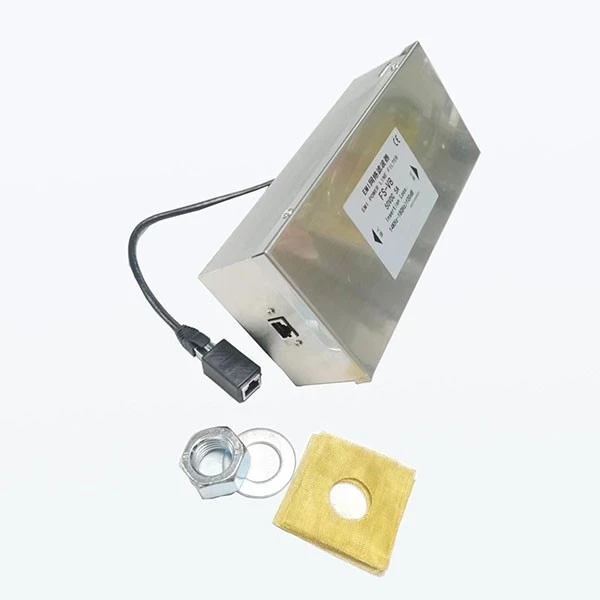
In some cases, you might be working on applications that require shielding rooms. These rooms need special EMI filters to prevent electromagnetic interference from entering or leaving the room.
Our Shielded Room Filters are designed specifically for these types of applications. They provide high - level attenuation and are built to meet the strict requirements of shielding rooms.

Conclusion
Designing an EMI filter is a complex process, but by following these steps, you can create a filter that effectively blocks electromagnetic interference. Remember to identify your requirements, choose the right filter topology, select high - quality components, consider the physical design, and test and optimize the filter.
If you're in the market for an EMI filter or need more information about our products, don't hesitate to reach out. We're here to help you find the best solution for your needs. Whether you're working on a small electronic project or a large industrial application, we've got the expertise and products to support you. Contact us today to start the procurement process and discuss how our EMI filters can meet your specific requirements.
References
- Electromagnetic Compatibility Engineering by Henry W. Ott
- Handbook of Electromagnetic Compatibility by Clayton R. Paul


