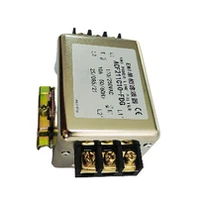
Hey there! As a supplier of 4-line Filters, I've been getting a lot of questions lately about how these nifty devices work to reduce interference. So, I thought I'd take a few minutes to break it down for you in a way that's easy to understand.
First off, let's talk about what interference is and why it's a problem. In simple terms, interference is any unwanted signal that can disrupt the normal operation of an electronic device. This can come from a variety of sources, such as power lines, radio waves, or even other electronic devices. When interference occurs, it can cause all sorts of issues, from poor performance to complete system failure.
That's where 4-line Filters come in. These filters are designed to block or reduce the amount of interference that reaches your electronic devices. They work by using a combination of inductors, capacitors, and resistors to create a low-pass filter. This filter allows the desired signals to pass through while blocking or attenuating the unwanted signals.
One of the key advantages of 4-line Filters is their ability to handle multiple lines of power or signal. As the name suggests, these filters have four lines, which means they can be used to filter multiple circuits at the same time. This makes them ideal for use in a wide range of applications, from industrial equipment to consumer electronics.

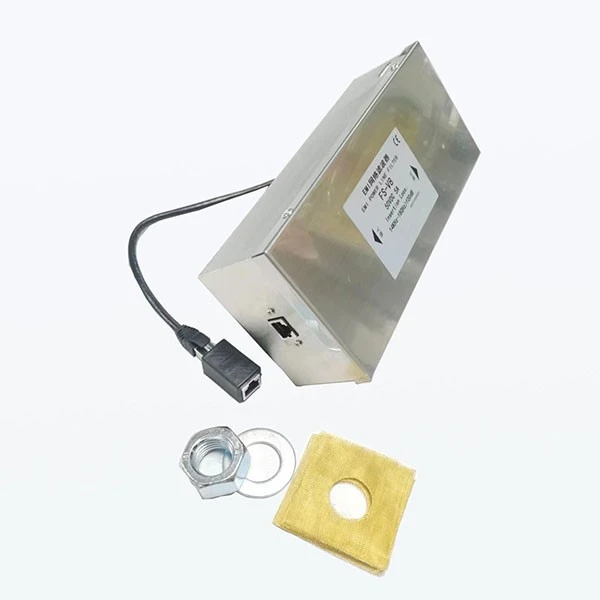
Another advantage of 4-line Filters is their high level of performance. These filters are designed to provide excellent attenuation of interference, even at high frequencies. This means they can effectively reduce the amount of noise and interference that reaches your electronic devices, resulting in improved performance and reliability.
So, how exactly do 4-line Filters work to reduce interference? Well, it all starts with the inductor. The inductor is a coil of wire that creates a magnetic field when current flows through it. This magnetic field opposes any change in the current, which means it can block or reduce the amount of high-frequency interference that passes through the filter.
Next, we have the capacitor. The capacitor is a device that stores electrical energy in an electric field. It works by allowing low-frequency signals to pass through while blocking high-frequency signals. This means it can effectively filter out any unwanted high-frequency noise or interference that may be present in the power or signal lines.
Finally, we have the resistor. The resistor is a device that resists the flow of electrical current. It works by converting electrical energy into heat, which means it can help to reduce the amount of interference that passes through the filter.
By combining these three components, 4-line Filters are able to create a low-pass filter that effectively blocks or reduces the amount of interference that reaches your electronic devices. This results in improved performance and reliability, as well as reduced noise and interference.
Now, let's take a look at some of the specific applications where 4-line Filters are commonly used. One of the most common applications is in industrial equipment. In industrial settings, there are often a lot of electrical devices and machinery that can generate a significant amount of interference. By using 4-line Filters, you can effectively reduce the amount of interference that reaches your equipment, resulting in improved performance and reliability.
Another common application is in consumer electronics. In today's world, we rely on a wide range of electronic devices, from smartphones and tablets to laptops and TVs. These devices are often sensitive to interference, which can cause all sorts of issues, from poor performance to complete system failure. By using 4-line Filters, you can effectively reduce the amount of interference that reaches your electronic devices, resulting in improved performance and reliability.
In addition to these applications, 4-line Filters are also commonly used in telecommunications, aerospace, and military applications. In these industries, there is often a high level of interference, which can cause serious problems if not properly addressed. By using 4-line Filters, you can effectively reduce the amount of interference that reaches your equipment, resulting in improved performance and reliability.
If you're interested in learning more about 4-line Filters and how they can help to reduce interference in your applications, I encourage you to check out our website at 4-line Filters. Here, you'll find a wide range of 4-line Filters, as well as other shielding accessories, such as Shielded Room Filters and EMI/rfi Power Line Filter.
We also offer a variety of customization options, so you can get the exact filter that you need for your specific application. Whether you need a standard filter or a custom-designed solution, we have the expertise and experience to help you find the right filter for your needs.
So, if you're looking for a reliable and effective way to reduce interference in your applications, look no further than our 4-line Filters. Contact us today to learn more about our products and services, and to start discussing your specific requirements. We look forward to hearing from you!
References:
- "Electromagnetic Compatibility Engineering" by Henry W. Ott
- "Filter Design for Electromagnetic Compatibility" by Clayton R. Paul