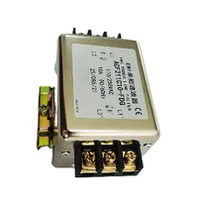
Are 4 - line Filters suitable for high - frequency signals?
Hey there! I'm a supplier of 4 - line Filters, and I often get asked whether these filters are a good fit for high - frequency signals. So, let's dig into this topic and see what's what.
First off, let's understand what 4 - line Filters are. 4 - line Filters are designed to reduce electromagnetic interference (EMI) in electrical circuits. They work by allowing the desired electrical signals to pass through while blocking unwanted frequencies. These filters are commonly used in a variety of applications, from consumer electronics to industrial equipment.
Now, when it comes to high - frequency signals, things get a bit more complicated. High - frequency signals typically range from a few megahertz to several gigahertz. These signals are used in many modern technologies, such as wireless communication systems, radar, and high - speed data transfer.
The suitability of 4 - line Filters for high - frequency signals depends on several factors. One of the key factors is the filter's frequency response. A good filter should have a flat frequency response within the desired frequency range, meaning it allows the high - frequency signals to pass through with minimal attenuation. However, most 4 - line Filters are designed for a specific frequency range, and if the high - frequency signals fall outside this range, the filter may not work effectively.

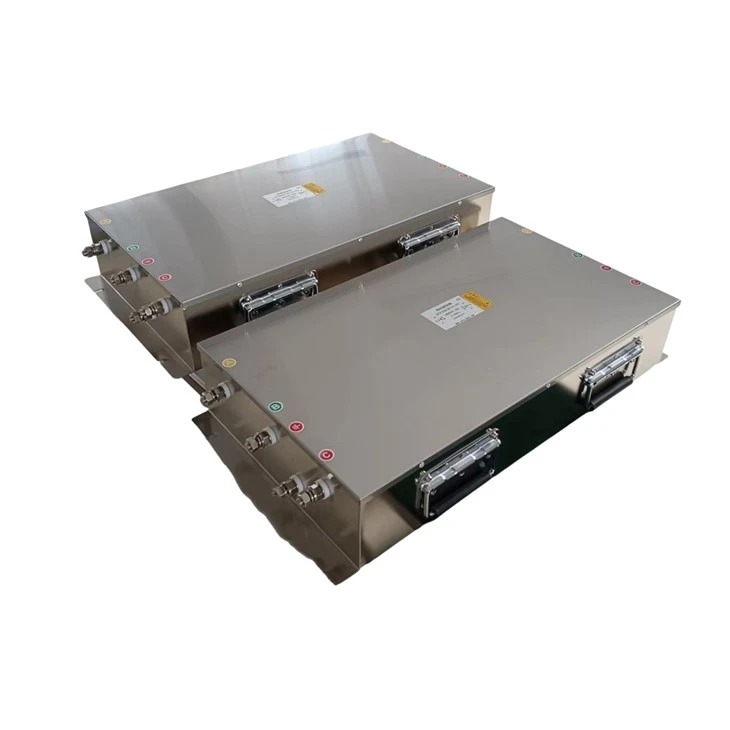
Another important factor is the filter's insertion loss. Insertion loss is the amount of signal power that is lost when the signal passes through the filter. For high - frequency signals, a low insertion loss is crucial to ensure that the signal strength is maintained. Some 4 - line Filters may have a high insertion loss at high frequencies, which can degrade the signal quality.
Let's talk about the construction of 4 - line Filters. They usually consist of inductors, capacitors, and resistors. The values of these components are carefully chosen to achieve the desired filtering characteristics. At high frequencies, the parasitic effects of these components become more significant. For example, the inductance of the wires and the capacitance between the components can cause resonance, which can lead to unwanted signal reflections and attenuation.
However, not all is lost. Some advanced 4 - line Filters are specifically designed to handle high - frequency signals. These filters use special materials and construction techniques to minimize the parasitic effects and improve the frequency response. They may also have a wider frequency range, allowing them to handle a broader spectrum of high - frequency signals.
In comparison to other types of filters, such as 3 Phase Filter and 3 Phase Emc Filter, 4 - line Filters have their own advantages and disadvantages when it comes to high - frequency signals. 3 - phase filters are often used in three - phase electrical systems and are designed to handle larger currents and higher power levels. They may not be as effective in filtering high - frequency signals as 4 - line Filters, especially in single - phase applications.
On the other hand, 4 - line Filters are more versatile and can be used in a wider range of applications. They are often more compact and easier to install, making them a popular choice for many electronic devices. However, they may not be able to handle the high power levels that 3 - phase filters can.
So, are 4 - line Filters suitable for high - frequency signals? The answer is, it depends. If the high - frequency signals are within the filter's designed frequency range and the filter has a low insertion loss, then it can be a good choice. However, if the signals are outside the filter's range or if the filter has a high insertion loss at high frequencies, then it may not be the best option.
If you're in the market for a filter for high - frequency signals, it's important to do your research. Look for filters that are specifically designed for high - frequency applications. Check the filter's specifications, such as the frequency response, insertion loss, and impedance. You may also want to consult with a filter expert or a supplier like me to get more information and advice.
In conclusion, 4 - line Filters can be suitable for high - frequency signals under the right conditions. But it's crucial to understand the limitations and capabilities of these filters before making a decision. If you have any questions or need more information about 4 - line Filters for high - frequency applications, don't hesitate to reach out. We're here to help you find the right filter for your needs.
References