Hey there! As a supplier of EMI shielding rooms, I often get asked about the materials used to build these rooms. So, I thought I'd write a blog post to share some insights on this topic.
First off, let's quickly talk about what an EMI shielding room is. An EMI (Electromagnetic Interference) shielding room is a specially designed enclosure that blocks electromagnetic radiation from entering or leaving the room. These rooms are crucial in various industries, like electronics testing, telecommunications, and even in some research facilities. There are different types, such as Emc Shielded Room, EMI Shielded Room, and Rf Shielded Room.
Now, let's dive into the materials.
Metal Sheets
One of the most common materials used for EMI shielding rooms is metal sheets. Metals like steel, copper, and aluminum are popular choices.


Steel is a heavy - duty option. It's strong and provides excellent mechanical support for the structure of the room. It also has good shielding effectiveness against low - frequency electromagnetic fields. The thickness of the steel sheets can vary depending on the level of shielding required. For general industrial applications, steel sheets with a thickness of around 1 - 3 mm are often used. However, in some high - security or high - precision testing environments, thicker sheets might be necessary.
Copper is well - known for its high electrical conductivity. This property makes it very effective at blocking high - frequency electromagnetic waves. Copper sheets are often used in combination with other materials to enhance the overall shielding performance. They can be relatively thin, sometimes as thin as 0.1 - 0.5 mm, and still provide good shielding. But copper can be a bit more expensive than steel, and it's also more prone to corrosion if not properly treated.
Aluminum is lightweight and has good corrosion resistance. It's a cost - effective alternative to copper and steel in some cases. Aluminum sheets are commonly used in applications where weight is a concern, such as in mobile or portable EMI shielding rooms. The shielding effectiveness of aluminum is decent for a wide range of frequencies, but it's not as high as that of copper for high - frequency applications.
Metal Mesh
Metal mesh is another important material. It's made by weaving or welding thin metal wires together to form a grid - like structure. Metal mesh is often used in areas where visibility or ventilation is required, such as windows or ventilation openings in the EMI shielding room.
The size of the mesh openings plays a crucial role in determining the shielding effectiveness. Smaller mesh openings can block higher - frequency electromagnetic waves. For example, a fine - mesh copper or steel mesh with openings of a few millimeters can provide good shielding for frequencies in the radio - frequency range. Metal mesh can also be combined with transparent conductive films to create see - through EMI shielding windows.
Conductive Paints and Coatings
Conductive paints and coatings are a convenient way to add EMI shielding to existing structures or to enhance the shielding of other materials. These paints are typically made by mixing conductive particles, such as silver, copper, or carbon, into a paint base.
Silver - based conductive paints offer the highest conductivity and shielding effectiveness. They can be used to coat the interior walls of the EMI shielding room to improve the overall shielding performance. However, silver is expensive, so copper - based or carbon - based conductive paints are more commonly used for cost - sensitive applications. These paints can be easily applied using spray guns or brushes, and they can provide a certain level of shielding for both low - and high - frequency electromagnetic fields.
Gaskets and Seals
Gaskets and seals are essential for ensuring a continuous and effective electromagnetic seal around doors, windows, and other penetrations in the EMI shielding room. These are usually made of conductive materials, such as metal - filled rubber or conductive foam.
Metal - filled rubber gaskets contain small metal particles that provide electrical conductivity. They are flexible and can conform to the shape of the door or window frame, creating a tight seal. Conductive foam gaskets are lightweight and compressible, making them suitable for applications where a soft seal is required. They can be easily cut to size and installed around the edges of openings to prevent electromagnetic leakage.
Conductive Flooring
Conductive flooring is often used in EMI shielding rooms to provide a low - impedance path for electrical charges. This helps to prevent electrostatic discharge (ESD) and also contributes to the overall shielding performance of the room.
Conductive vinyl or rubber flooring is a common choice. These materials are embedded with conductive particles, such as carbon fibers or metal powders, to make them electrically conductive. The flooring should be properly grounded to ensure that any static charges are safely dissipated.
Insulating Materials
While the main focus is on conductive materials for EMI shielding, insulating materials also play an important role. Insulating materials are used to separate different conductive layers or to prevent electrical short - circuits within the shielding structure.
Materials like fiberglass, polyethylene foam, and ceramic insulation can be used. Fiberglass is a popular choice because it's lightweight, fire - resistant, and has good thermal and electrical insulation properties. It can be used as a spacer between metal sheets or as an insulating layer in the walls of the EMI shielding room.
Electronic Components
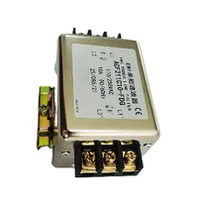
In addition to the physical construction materials, electronic components are also used in EMI shielding rooms. For example, ferrite beads and filters are used to suppress electromagnetic interference in power lines and signal cables.
Ferrite beads are passive components that act as inductors at high frequencies. They can absorb and dissipate high - frequency noise in power and signal lines. Filters, on the other hand, are used to selectively allow certain frequencies to pass through while blocking others. They can be designed to meet specific shielding requirements for different types of electronic equipment within the room.
Installation and Assembly
The way these materials are installed and assembled is just as important as the materials themselves. The metal sheets need to be properly joined together to ensure a continuous electrical connection. Welding, riveting, or using conductive adhesives are common methods for joining metal sheets.
All penetrations in the EMI shielding room, such as cables, pipes, and ventilation ducts, need to be properly sealed with the appropriate gaskets and filters to prevent electromagnetic leakage. The grounding system of the room also needs to be carefully designed and installed to ensure that all conductive materials are at the same electrical potential and that any induced electrical charges are safely discharged.
Conclusion
So, as you can see, building an EMI shielding room involves a variety of materials, each with its own unique properties and functions. The choice of materials depends on factors such as the level of shielding required, the frequency range of the electromagnetic fields, the budget, and the specific application of the room.
If you're in the market for an EMI shielding room, whether it's an Emc Shielded Room, EMI Shielded Room, or Rf Shielded Room, we're here to help. We have the expertise and the resources to design and build a high - quality EMI shielding room that meets your specific needs. If you're interested in discussing your requirements or getting a quote, feel free to reach out and start a conversation with us. We'll work closely with you to find the best solution for your EMI shielding needs.
References
- "Electromagnetic Compatibility Engineering" by Henry W. Ott
- "Handbook of Electromagnetic Compatibility" by Clayton R. Paul