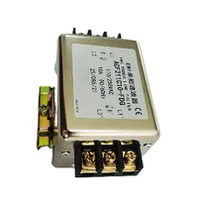
Yo, I'm an RFI EMC filter supplier, and I've been in this game for quite a while. One question that keeps coming up from customers is, "What's the impact of RFI EMC filters on energy efficiency?" Well, let's dig into it.
First off, let's quickly explain what RFI EMC filters are. RFI stands for Radio Frequency Interference, and EMC is short for Electromagnetic Compatibility. These filters are designed to block or reduce unwanted electromagnetic signals, making sure that electronic devices work properly without interfering with each other.
Now, onto energy efficiency. Energy efficiency is all about getting the most out of the energy we use. In the world of electronics, it means making devices consume less power while still delivering the same level of performance.
How RFI EMC Filters Affect Energy Efficiency
1. Reducing Power Losses
One of the key ways RFI EMC filters impact energy efficiency is by reducing power losses. When electronic devices operate, they generate electromagnetic interference (EMI). This EMI can cause power losses in the form of heat. RFI EMC filters work by suppressing this EMI, which in turn reduces the amount of power wasted as heat.
For example, in a power supply unit, without an RFI EMC filter, the EMI generated could cause the power supply to operate less efficiently. The filter helps to clean up the electrical signal, allowing the power supply to convert electrical energy more effectively. This means less energy is lost in the conversion process, and more of it is available to power the device.


2. Improving Device Performance
Another way RFI EMC filters boost energy efficiency is by improving the overall performance of electronic devices. When a device is free from EMI, it can operate more smoothly and efficiently.
Let's take a motor as an example. A motor that is affected by EMI may experience erratic behavior, such as uneven speed or increased vibration. This not only affects the performance of the motor but also increases its energy consumption. By using an RFI EMC filter, we can reduce the EMI and ensure that the motor operates at its optimal level. As a result, the motor consumes less energy while delivering the same amount of work.
3. Enabling Energy - Saving Modes
Many modern electronic devices come with energy - saving modes. However, these modes may not work properly if the device is affected by EMI. RFI EMC filters help to create a stable electromagnetic environment, allowing the device to enter and maintain its energy - saving modes effectively.
For instance, a computer may have a sleep mode that reduces its power consumption when it's not in use. But if the computer is constantly bombarded with EMI, it may not be able to detect when it's idle correctly, or it may wake up unexpectedly. An RFI EMC filter can prevent this interference, enabling the computer to stay in its energy - saving mode for longer periods.
Different Types of RFI EMC Filters and Their Energy - Saving Potential
1. 2 - line Filters
2 - line Filters are commonly used in single - phase electrical systems. They are designed to filter out EMI on two lines, usually the live and neutral lines. These filters are relatively simple and cost - effective, and they can significantly improve the energy efficiency of small to medium - sized electronic devices.
For example, in a home appliance like a refrigerator, a 2 - line filter can reduce the EMI generated by the compressor motor. This helps the compressor to run more efficiently, reducing the overall energy consumption of the refrigerator.
2. 3 Phase Filter
3 Phase Filter are used in three - phase electrical systems, which are commonly found in industrial applications. These filters are more complex than 2 - line filters as they need to filter out EMI on three lines.
In an industrial setting, a 3 - phase motor is a major consumer of energy. By using a 3 - phase RFI EMC filter, we can reduce the EMI in the motor's electrical supply. This leads to smoother operation of the motor, less wear and tear, and lower energy consumption. Over time, the energy savings can be substantial, making the investment in a 3 - phase filter well worth it.
3. 4 - line Filters
4 - line Filters are designed to filter out EMI on four lines, typically including the live, neutral, and two additional lines. These filters are often used in more complex electrical systems where a higher level of EMI suppression is required.
In a data center, for example, a 4 - line filter can be used to protect the sensitive electronic equipment from EMI. By reducing the EMI, the equipment can operate more efficiently, and the cooling systems in the data center can also work more effectively. Since cooling is a major energy consumer in data centers, the use of 4 - line filters can lead to significant energy savings.
Real - World Examples of Energy Savings
Let's look at some real - world scenarios where RFI EMC filters have made a difference in energy efficiency.
In a manufacturing plant, a company installed 3 - phase RFI EMC filters on its production line motors. Before the installation, the motors were consuming a large amount of energy due to EMI - related inefficiencies. After the installation, the company noticed a significant reduction in energy consumption. The motors ran more smoothly, and there was less downtime for maintenance. Over a year, the company was able to save a substantial amount of money on its energy bills.
In a residential building, a homeowner replaced the old power strips with ones that had built - in 2 - line RFI EMC filters. The homeowner noticed that the electronic devices in the house, such as TVs and chargers, were running cooler. This was a sign that the filters were reducing the power losses due to EMI. As a result, the overall energy consumption of the household decreased, and the homeowner saw a reduction in their monthly electricity bill.
Conclusion
In conclusion, RFI EMC filters have a significant impact on energy efficiency. They reduce power losses, improve device performance, and enable energy - saving modes. Whether you're using a small home appliance or a large industrial motor, the right RFI EMC filter can help you save energy and money.
If you're interested in improving the energy efficiency of your electronic devices or systems, I'd love to have a chat with you. As an RFI EMC filter supplier, I can help you choose the right filter for your specific needs. Don't hesitate to reach out and start a conversation about your procurement requirements.
References
- "Electromagnetic Compatibility Engineering" by Henry W. Ott
- "Power Electronics: Converters, Applications, and Design" by Ned Mohan, Tore M. Undeland, and William P. Robbins
- Industry reports on energy efficiency in electronics and electrical systems