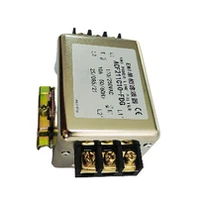
As a supplier of 3 PHASE EMC FILTERS, I often encounter inquiries regarding the electromagnetic compatibility (EMC) improvement rate of our products. Understanding this rate is crucial for customers who are looking to enhance the performance and reliability of their electrical systems by reducing electromagnetic interference (EMI). In this blog post, I will delve into the concept of EMC improvement rate, how it is measured, and the factors that influence it in the context of 3 PHASE EMC FILTERS.
What is Electromagnetic Compatibility (EMC)?
Electromagnetic compatibility refers to the ability of electrical and electronic equipment to function properly in its electromagnetic environment without causing unacceptable electromagnetic interference to other equipment. In other words, it ensures that different devices can coexist and operate without interfering with each other's performance. EMI, on the other hand, is the unwanted electromagnetic noise that can disrupt the normal operation of electronic devices.
The Role of 3 PHASE EMC FILTERS
3 PHASE EMC FILTERS are designed to suppress EMI in three-phase electrical systems. They are commonly used in industrial applications, such as motor drives, power supplies, and renewable energy systems, where high-power equipment can generate significant amounts of electromagnetic noise. By filtering out unwanted frequencies, these filters help to improve the EMC of the system, reduce the risk of malfunctions, and comply with relevant electromagnetic standards.
Measuring the EMC Improvement Rate
The EMC improvement rate of a 3 PHASE EMC FILTER is typically measured in decibels (dB). It represents the reduction in EMI levels achieved by the filter at specific frequencies. To measure this rate, a spectrum analyzer is used to measure the EMI levels before and after the filter is installed in the system. The difference between these two measurements is the EMC improvement rate.


For example, if the EMI level at a particular frequency is 80 dB before the filter is installed and 60 dB after the filter is installed, the EMC improvement rate at that frequency is 20 dB. A higher improvement rate indicates a more effective filter in reducing EMI.
Factors Affecting the EMC Improvement Rate
Several factors can influence the EMC improvement rate of a 3 PHASE EMC FILTER. These include:
Filter Design
The design of the filter plays a crucial role in determining its performance. A well-designed filter will have a high attenuation rate at the frequencies of interest, which means it can effectively reduce EMI. Factors such as the type of filter topology (e.g., pi-filter, T-filter), the number of stages, and the values of the filter components (e.g., inductors, capacitors) all affect the filter's performance.
Frequency Range
The EMC improvement rate can vary depending on the frequency range. Filters are typically designed to provide maximum attenuation at specific frequencies or frequency bands. Therefore, the improvement rate will be higher at these frequencies and lower at frequencies outside the filter's design range.
Load Impedance
The impedance of the load connected to the filter can also affect its performance. A filter is designed to work optimally with a specific load impedance. If the actual load impedance differs from the designed value, the filter's performance may be degraded, resulting in a lower EMC improvement rate.
Installation
Proper installation of the filter is essential for achieving the desired EMC improvement rate. Incorrect installation, such as improper grounding or incorrect wiring, can introduce additional EMI and reduce the filter's effectiveness.
Comparing Different Types of Filters
In addition to 3 PHASE EMC FILTERS, there are other types of filters available in the market, such as 2-line Filters and 4-line Filters. These filters are designed for different applications and have different EMC improvement rates.
2-line filters are typically used in single-phase electrical systems and are designed to filter out EMI on two lines. They are suitable for applications where the EMI levels are relatively low. 4-line filters, on the other hand, are used in three-phase electrical systems and can filter out EMI on four lines. They provide a higher level of protection against EMI and are suitable for applications where the EMI levels are higher.
Another type of filter is the Rfi Emc Filter, which is designed to suppress radio frequency interference (RFI) in addition to EMI. These filters are commonly used in applications where there is a high risk of RFI, such as in radio communication systems.
Importance of Choosing the Right Filter
Choosing the right 3 PHASE EMC FILTER is crucial for achieving the desired EMC improvement rate. A filter that is not properly selected may not provide sufficient attenuation at the frequencies of interest, resulting in poor EMC performance. Therefore, it is important to consider the following factors when choosing a filter:
Application Requirements
The first step in choosing a filter is to understand the specific requirements of the application. This includes the type of equipment, the operating frequency range, the level of EMI, and the relevant electromagnetic standards.
Filter Specifications
Once the application requirements are understood, the next step is to select a filter that meets these requirements. This involves considering the filter's specifications, such as the attenuation rate, the frequency range, the current rating, and the impedance.
Manufacturer Reputation
It is also important to choose a filter from a reputable manufacturer. A reputable manufacturer will have a proven track record of producing high-quality filters and will provide technical support and documentation to ensure proper installation and operation of the filter.
Conclusion
The EMC improvement rate of a 3 PHASE EMC FILTER is an important parameter that determines its effectiveness in reducing EMI and improving the EMC of an electrical system. By understanding the factors that affect this rate and choosing the right filter for the application, customers can ensure that their electrical systems operate reliably and comply with relevant electromagnetic standards.
If you are interested in learning more about our 3 PHASE EMC FILTERS or have any questions regarding EMC improvement rates, please feel free to contact us. We have a team of experienced engineers who can provide you with technical support and help you choose the right filter for your application.
References
- Electromagnetic Compatibility Handbook, Second Edition, by Clayton R. Paul
- EMC for Product Designers, Fourth Edition, by Tim Williams
- Understanding Electromagnetic Compatibility, Third Edition, by Henry W. Ott