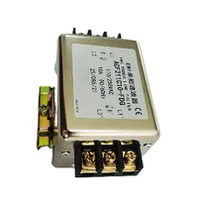
Electromagnetic compatibility (EMC) is a crucial aspect in the design and operation of electronic systems. It refers to the ability of electronic devices and systems to function properly in their electromagnetic environment without causing or suffering unacceptable electromagnetic interference (EMI). In this blog, as a signal line filter supplier, I'll delve into the EMC performance of signal line filters and explain why they are vital for ensuring the smooth operation of various electronic applications.
Understanding Signal Line Filters
Signal line filters are essential components used to suppress electromagnetic interference in signal lines. They are designed to allow the desired signals to pass through while attenuating unwanted noise and interference. These filters come in various types and configurations, each tailored to specific applications and performance requirements.
EMC Performance Parameters
The EMC performance of a signal line filter can be evaluated through several key parameters. One of the most important is insertion loss, which measures the amount of attenuation the filter provides to the unwanted signals. Insertion loss is typically expressed in decibels (dB) and is a function of frequency. A higher insertion loss at a particular frequency indicates better filtering performance.
Another crucial parameter is the cut - off frequency. This is the frequency at which the filter starts to significantly attenuate the signals. Filters can be classified as low - pass, high - pass, band - pass, or band - stop based on their cut - off frequencies and the range of frequencies they allow or block.
The impedance of the filter also plays a vital role in its EMC performance. A well - matched impedance between the filter and the signal line ensures maximum power transfer of the desired signals and effective attenuation of the interference. Mismatched impedance can lead to signal reflections, which can degrade the overall performance of the system and cause additional EMI.
Factors Affecting EMC Performance
Several factors can influence the EMC performance of a signal line filter. The component quality is of utmost importance. High - quality capacitors, inductors, and resistors used in the filter construction can provide better performance and stability. For example, high - quality inductors with low resistance and high Q - factor can offer better attenuation at high frequencies.
The physical layout and design of the filter also matter. A compact and well - shielded design can reduce the coupling of external electromagnetic fields into the filter and prevent internal EMI leakage. Additionally, proper grounding of the filter is essential for effective EMI suppression.


The operating environment can have a significant impact on the filter's performance. Temperature, humidity, and vibration can all affect the electrical characteristics of the filter components. For instance, extreme temperatures can change the capacitance and inductance values of the components, leading to a shift in the filter's cut - off frequency and insertion loss.
Applications and Their EMC Requirements
Different applications have varying EMC requirements, and signal line filters are selected accordingly.
Telecommunications
In telecommunications systems, signal line filters are used to ensure clear and reliable communication. For example, in mobile phones, filters are used to separate different frequency bands, such as GSM, 3G, 4G, and 5G signals. The filters need to have high selectivity to prevent interference between these bands and ensure high - quality voice and data transmission.
Automotive
Automotive electronics are becoming increasingly complex, with a large number of electronic control units (ECUs) and sensors. Signal line filters are used to protect these components from EMI generated by the vehicle's electrical system, such as the ignition system and electric motors. The filters need to be able to withstand harsh environmental conditions, including high temperatures, vibrations, and electromagnetic radiation from other vehicles and infrastructure.
Medical Devices
Medical devices require a high level of EMC performance to ensure accurate and reliable operation. For example, in electrocardiogram (ECG) machines, filters are used to remove noise from the electrical signals generated by the heart. The filters need to have high - precision performance to avoid false readings and ensure patient safety.
Our Product Range and EMC Performance
As a signal line filter supplier, we offer a wide range of filters to meet the diverse EMC requirements of different applications. Our 2 - line Filters are designed for applications where two signal lines need to be filtered. These filters provide excellent insertion loss and impedance matching, ensuring effective EMI suppression.
Our Shielded Room Filters are specifically designed for use in shielded rooms, which are used to protect sensitive electronic equipment from external electromagnetic interference. These filters have a high level of shielding effectiveness and are able to maintain their performance in a controlled electromagnetic environment.
We also offer 3 Phase Filter for industrial applications where three - phase power systems are used. These filters are designed to suppress EMI in three - phase power lines and ensure stable and reliable operation of industrial equipment.
Importance of Testing and Certification
To ensure the EMC performance of our signal line filters, we conduct rigorous testing. We use state - of - the - art testing equipment to measure the insertion loss, cut - off frequency, and impedance of the filters at different frequencies. Our filters are also tested in an anechoic chamber to simulate real - world electromagnetic environments and evaluate their performance under different conditions.
In addition to in - house testing, our filters are also certified by international standards organizations, such as the International Electrotechnical Commission (IEC) and the Federal Communications Commission (FCC). These certifications provide assurance to our customers that our filters meet the highest EMC standards and can be used in a wide range of applications.
Contact Us for Your EMC Needs
If you are looking for high - performance signal line filters to meet your EMC requirements, we are here to help. Our team of experts can provide you with professional advice on filter selection, installation, and maintenance. We understand the importance of EMC in your applications and are committed to providing you with the best solutions. Whether you are in the telecommunications, automotive, medical, or any other industry, we have the right filter for you. Contact us today to start a discussion about your specific needs and let us work together to achieve optimal EMC performance in your systems.
References
- Paul, Clayton R. "Introduction to Electromagnetic Compatibility." John Wiley & Sons, 2006.
- Ott, Henry W. "Electromagnetic Compatibility Engineering." Wiley - Interscience, 2009.
- International Electrotechnical Commission (IEC) standards on electromagnetic compatibility.