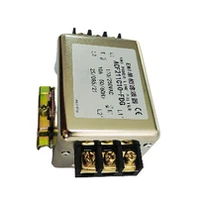
As a supplier of RFI EMC filters, I've witnessed firsthand the critical role these components play in modern electronic systems. Radio Frequency Interference (RFI) and Electromagnetic Compatibility (EMC) are significant concerns in today's technology - saturated world. With the increasing complexity of electronic devices and the proliferation of wireless communication, the need for effective RFI EMC filters has never been greater. But what exactly is the effect of RFI EMC filters on signal quality? Let's delve into this topic.
Understanding RFI and EMC
Before we explore the impact on signal quality, it's essential to understand RFI and EMC. RFI refers to the electromagnetic radiation that can disrupt the normal operation of electronic devices. This interference can come from various sources, such as other electronic devices, power lines, or even natural phenomena like lightning. EMC, on the other hand, is the ability of an electronic device or system to function properly in its electromagnetic environment without causing interference to other devices.
RFI EMC filters are designed to suppress RFI and ensure EMC. They work by allowing the desired signals to pass through while blocking or attenuating unwanted electromagnetic interference. These filters are typically installed at the input or output of electronic devices or systems to protect them from external interference and prevent them from generating interference that could affect other devices.
Positive Effects of RFI EMC Filters on Signal Quality
1. Reducing Noise
One of the most significant positive effects of RFI EMC filters on signal quality is the reduction of noise. Noise in electronic signals can distort the information being transmitted, leading to errors in data communication or degraded performance in audio and video systems. RFI EMC filters can effectively suppress high - frequency noise, allowing the clean and undistorted signal to pass through. For example, in a communication system, a filter can remove the background noise caused by nearby electronic devices, improving the clarity of the transmitted voice or data.
2. Improving Signal Integrity
Signal integrity refers to the quality of the electrical signal as it travels through a circuit or system. RFI EMC filters help maintain signal integrity by preventing interference from altering the shape, amplitude, or phase of the signal. In high - speed digital circuits, even small amounts of interference can cause bit errors, which can lead to system malfunctions. By filtering out unwanted electromagnetic interference, RFI EMC filters ensure that the digital signals remain stable and accurate, reducing the probability of errors.
3. Enhancing System Performance
In electronic systems, RFI EMC filters can enhance overall performance. For instance, in a power supply system, a well - designed filter can reduce the ripple voltage and electromagnetic interference, providing a more stable power output. This stable power supply is crucial for the proper operation of sensitive electronic components, such as microprocessors and integrated circuits. By improving the power quality, the filter indirectly improves the performance of the entire system.
Negative Effects of RFI EMC Filters on Signal Quality
1. Signal Attenuation
One of the potential negative effects of RFI EMC filters is signal attenuation. Filters are designed to block certain frequencies, and in the process, they may also attenuate the desired signals to some extent. This is especially true for filters with a narrow bandwidth or high attenuation levels. For example, in a high - frequency communication system, a filter that is too aggressive in suppressing interference may also reduce the strength of the transmitted signal, leading to a decrease in signal - to - noise ratio and potentially affecting the communication range or quality.
2. Phase Shift
RFI EMC filters can also introduce a phase shift in the signal. A phase shift occurs when the filter changes the relative timing of different parts of the signal. In some applications, such as audio and video systems, a phase shift can cause distortion or artifacts. For example, in a stereo audio system, a phase shift between the left and right channels can result in a loss of stereo imaging, making the sound less immersive.
3. Group Delay
Group delay is another potential issue associated with RFI EMC filters. It refers to the time delay of different frequency components of a signal as it passes through the filter. Non - uniform group delay can cause distortion in the signal, especially in broadband signals. For example, in a high - definition video signal, non - uniform group delay can lead to smearing or blurring of the image, degrading the visual quality.
Types of RFI EMC Filters and Their Impact on Signal Quality
1. Ac Emc Filter
AC EMC filters are commonly used in power supply systems to suppress electromagnetic interference in alternating current (AC) circuits. These filters are designed to protect electronic devices from line - conducted interference and prevent the devices from generating interference that could be fed back into the power grid. AC EMC filters typically have a relatively wide bandwidth and can effectively reduce common - mode and differential - mode interference. However, they may also introduce some signal attenuation and phase shift, especially at high frequencies.
2. 2 - line Filters
2 - line filters are used in single - phase or two - phase electrical systems. They are designed to filter out interference on two conductors, typically the live and neutral wires in an AC circuit. 2 - line filters can provide good protection against both common - mode and differential - mode interference. The impact on signal quality depends on the specific design of the filter, but in general, they can cause some attenuation and phase shift, especially if they are optimized for high - attenuation performance.
3. Shielded Room Filters
Shielded room filters are used in shielded enclosures to prevent electromagnetic interference from entering or leaving the room. These filters are often used in sensitive applications, such as laboratories, data centers, and military facilities. Shielded room filters typically have very high attenuation levels to ensure a high degree of electromagnetic isolation. However, they can also have a significant impact on signal quality, including high signal attenuation and phase shift, due to their aggressive filtering characteristics.
Mitigating the Negative Effects
To mitigate the negative effects of RFI EMC filters on signal quality, several strategies can be employed. Firstly, careful filter selection is crucial. It's important to choose a filter that is specifically designed for the application and has the appropriate bandwidth and attenuation characteristics. For example, in a communication system where signal integrity is critical, a filter with a more gentle attenuation slope may be preferred to minimize signal attenuation.
Secondly, filter placement is also important. Placing the filter as close as possible to the source of interference or the device being protected can reduce the length of the unfiltered signal path, minimizing the impact of interference on the signal. Additionally, proper grounding of the filter is essential to ensure its effectiveness and reduce the risk of introducing additional interference.
Conclusion
In conclusion, RFI EMC filters have both positive and negative effects on signal quality. On the one hand, they are essential for reducing noise, improving signal integrity, and enhancing system performance. On the other hand, they can cause signal attenuation, phase shift, and group delay, which can degrade signal quality. As a supplier of RFI EMC filters, we understand the importance of balancing these effects to meet the specific needs of our customers.


If you are looking for high - quality RFI EMC filters for your electronic systems, we are here to help. Our team of experts can assist you in selecting the right filter for your application and provide technical support to ensure optimal performance. Contact us to start a procurement discussion and find the best solution for your signal quality and electromagnetic compatibility requirements.