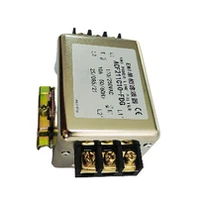
Hey there! As a supplier of 3 PHASE AC FILTERS, I often get asked about the attenuation performance of these nifty devices. So, let's dive right in and break it down.
First off, what exactly is attenuation performance? Well, in simple terms, it's how well a filter can reduce the amplitude of unwanted electrical signals, like electromagnetic interference (EMI) and radio - frequency interference (RFI). These interferences can mess up the normal operation of electrical equipment, causing glitches, malfunctions, or even complete failures. That's where our 3 PHASE AC FILTERS come in.
How 3 PHASE AC FILTERS Work
3 PHASE AC FILTERS are designed to work with three - phase alternating current systems, which are commonly used in industrial and commercial settings. They use a combination of inductors, capacitors, and resistors to create a circuit that selectively allows the desired AC power to pass through while blocking or reducing the unwanted frequencies.
The basic principle behind the attenuation is based on the impedance characteristics of the filter components. Inductors have high impedance at high frequencies, which means they can block high - frequency interference. Capacitors, on the other hand, have low impedance at high frequencies, allowing them to shunt the interference to the ground. By carefully selecting and arranging these components, we can design a filter that provides excellent attenuation over a wide range of frequencies.
Factors Affecting Attenuation Performance
There are several factors that can affect the attenuation performance of a 3 PHASE AC FILTER.
Frequency Range
The frequency range of the interference is a crucial factor. Different types of electrical equipment generate interference at different frequencies. For example, switching power supplies can generate high - frequency noise in the range of a few kilohertz to several megahertz. Our filters are designed to provide high attenuation in the frequency ranges where most common interferences occur. Generally, a good 3 PHASE AC FILTER can provide attenuation of 30 dB to 60 dB or more in the relevant frequency bands. You can check out our 3 Phase Ac Filter product page for more details on the frequency response of our filters.
Load Impedance
The impedance of the load connected to the filter also affects the attenuation performance. If the load impedance is not properly matched to the filter impedance, it can cause reflections and reduce the effectiveness of the filter. That's why we offer a variety of filter models with different impedance ratings to ensure optimal performance in different applications.
Filter Design
The design of the filter, including the type of circuit topology (e.g., pi - filter, T - filter), the values of the components, and the physical layout, can have a significant impact on the attenuation. Our engineers use advanced simulation tools and testing equipment to optimize the filter design for maximum attenuation and reliability.
Measuring Attenuation Performance
To measure the attenuation performance of a 3 PHASE AC FILTER, we use specialized test equipment, such as network analyzers. These instruments can generate a test signal with a known frequency and amplitude and measure the output signal after passing through the filter. The difference between the input and output signal amplitudes is the attenuation, which is usually expressed in decibels (dB).
We also conduct extensive in - house testing to ensure that our filters meet or exceed the industry standards for attenuation performance. Our Ac Emc Filter products are rigorously tested to ensure they can effectively reduce EMI and RFI in real - world applications.
Applications and Benefits of Good Attenuation
A 3 PHASE AC FILTER with excellent attenuation performance has a wide range of applications. In industrial settings, it can be used to protect sensitive equipment, such as programmable logic controllers (PLCs), variable frequency drives (VFDs), and industrial computers, from EMI and RFI. This helps to improve the reliability and efficiency of the production process.
In commercial buildings, 3 PHASE AC FILTERS can be used in electrical systems to reduce interference in communication systems, such as Wi - Fi routers and telephone lines. This ensures a stable and high - quality communication environment.
The benefits of using a filter with good attenuation performance are obvious. It can prevent equipment damage, reduce downtime, and improve the overall performance of electrical systems. Additionally, it helps to comply with electromagnetic compatibility (EMC) regulations, which are becoming increasingly strict in many countries.
Comparing Different Filter Options
When choosing a 3 PHASE AC FILTER, it's important to compare the attenuation performance of different products. Some filters may offer high attenuation at a specific frequency range but perform poorly at other frequencies. Our Shielded Room Filters are designed to provide a balanced attenuation performance over a wide frequency spectrum, making them suitable for a variety of applications.
It's also important to consider other factors, such as the size, cost, and ease of installation of the filter. Our team of experts can help you select the right filter based on your specific requirements and budget.
Conclusion
In conclusion, the attenuation performance of a 3 PHASE AC FILTER is a critical factor in its effectiveness. By understanding the factors that affect attenuation, how it's measured, and its applications, you can make an informed decision when choosing a filter for your electrical system.


If you're interested in learning more about our 3 PHASE AC FILTERS or have any questions about attenuation performance, don't hesitate to reach out. We're here to help you find the best solution for your needs. Whether you're in the industrial, commercial, or any other sector, our filters can provide the reliable attenuation you need to keep your electrical equipment running smoothly. So, let's start a conversation and see how we can work together to improve your electrical system's performance.
References
- Electromagnetic Compatibility Engineering by Henry W. Ott
- Handbook of Filter Design by A. Ian Zverev