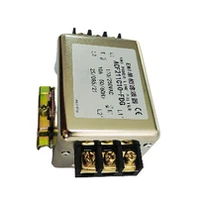
When it comes to power systems, especially in industrial and commercial settings, 3 phase filters play a crucial role in ensuring the smooth operation of electrical equipment. As a leading supplier of 3 phase filters, I often get asked about the size and weight of these essential components. In this blog post, I will delve into the factors that influence the size and weight of 3 phase filters, and how these characteristics can impact their performance and application.
Factors Affecting the Size and Weight of 3 Phase Filters
1. Power Rating
The power rating of a 3 phase filter is one of the primary factors that determine its size and weight. Higher power filters are designed to handle larger electrical loads, which means they require more substantial components such as inductors, capacitors, and resistors. These components are typically larger and heavier to accommodate the increased current and voltage levels. For example, a 3 phase filter with a power rating of 100 kVA will generally be larger and heavier than one with a rating of 10 kVA.
2. Frequency Range
The frequency range of a 3 phase filter also affects its size and weight. Filters designed to operate over a wider frequency range need more complex circuitry and larger components to provide effective filtering across the entire spectrum. This is because different frequencies require different types of filtering elements, and a wider range means more elements are needed. As a result, filters with a broader frequency range tend to be larger and heavier.


3. Filter Configuration
The configuration of a 3 phase filter can have a significant impact on its size and weight. There are several types of filter configurations, including single-stage, multi-stage, and active filters. Multi-stage filters, which use multiple filtering stages to provide better performance, are generally larger and heavier than single-stage filters. Active filters, which use electronic components to actively cancel out unwanted frequencies, can also be larger and heavier due to the additional circuitry required.
4. Environmental Requirements
The environmental conditions in which a 3 phase filter will operate can also influence its size and weight. Filters designed for use in harsh environments, such as those with high temperatures, humidity, or vibration, may need to be more robust and have additional protective features. This can include larger enclosures, heat sinks, and shock-absorbing materials, all of which add to the overall size and weight of the filter.
Typical Size and Weight Ranges
The size and weight of 3 phase filters can vary widely depending on the factors mentioned above. However, I can provide some general guidelines based on our experience as a supplier.
For small to medium-sized 3 phase filters with power ratings ranging from 1 kVA to 50 kVA, the dimensions can typically range from 100 mm x 100 mm x 100 mm to 500 mm x 500 mm x 500 mm, and the weight can range from a few kilograms to around 50 kilograms.
Larger 3 phase filters with power ratings above 50 kVA can be significantly larger and heavier. Their dimensions can exceed 1000 mm x 1000 mm x 1000 mm, and their weight can reach several hundred kilograms or more.
It's important to note that these are just rough estimates, and the actual size and weight of a 3 phase filter will depend on the specific requirements of the application.
Impact of Size and Weight on Performance and Application
1. Performance
The size and weight of a 3 phase filter can have a direct impact on its performance. Larger filters generally have more room for larger components, which can provide better filtering performance. They can also dissipate heat more effectively, which is important for maintaining the stability and reliability of the filter over time. On the other hand, smaller filters may be more limited in terms of their performance capabilities, but they can be more suitable for applications where space is limited.
2. Application
The size and weight of a 3 phase filter also need to be considered in the context of the application. In some applications, such as in mobile or portable equipment, size and weight are critical factors. In these cases, smaller and lighter filters are preferred to ensure easy installation and portability. In other applications, such as in large industrial power systems, the size and weight of the filter may be less of a concern, as long as it can provide the required filtering performance.
Importance of Choosing the Right Size and Weight
Choosing the right size and weight of a 3 phase filter is essential for ensuring optimal performance and cost-effectiveness. A filter that is too small may not be able to provide the required filtering performance, which can lead to problems such as electrical interference, equipment damage, and reduced efficiency. On the other hand, a filter that is too large and heavy may be more expensive and may not be necessary for the application.
As a supplier, we work closely with our customers to understand their specific requirements and recommend the most suitable 3 phase filters based on factors such as power rating, frequency range, filter configuration, and environmental conditions. We also offer a range of Rfi Emc Filter, 2-line Filters, and Ac Emc Filter to meet different needs.
Conclusion
In conclusion, the size and weight of a 3 phase filter are influenced by several factors, including power rating, frequency range, filter configuration, and environmental requirements. These characteristics can have a significant impact on the performance and application of the filter. As a supplier, we are committed to providing our customers with high-quality 3 phase filters that are tailored to their specific needs. If you are in the market for a 3 phase filter, I encourage you to contact us to discuss your requirements and explore our range of products. We look forward to working with you to find the perfect solution for your power filtering needs.