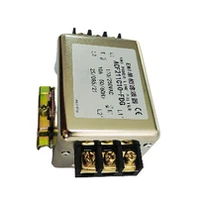
Yo, I'm an EMI filter supplier, and let me tell you, designing these things is no walk in the park. There are tons of challenges that we face every day, and in this blog, I'm gonna break down some of the major ones.
First off, let's talk about frequency range. EMI filters need to work across a wide range of frequencies. You've got low - frequency interference, which can come from things like power lines and motors, and then there's high - frequency interference, often from things like radio transmitters and digital circuits. Designing a filter that can effectively block or attenuate both low and high - frequency noise is a real headache.
For low - frequency noise, we need large inductors and capacitors. These components are physically bigger and can be more expensive. And as the frequency gets lower, the size of the inductor or capacitor needed to achieve the desired attenuation can become really impractical. On the other hand, high - frequency noise requires different design considerations. At high frequencies, parasitic effects come into play. Parasitic capacitance and inductance in the filter components can change the filter's performance and make it less effective. We have to be really careful with the layout of the components on the PCB (printed circuit board) to minimize these parasitic effects.
Another big challenge is the impedance matching. EMI filters need to be properly matched to the source and load impedance. If the impedance is not matched correctly, it can lead to reflections. These reflections can cause the filter to perform poorly and may even make the interference worse in some cases. We have to measure the impedance of the source and load accurately and then design the filter to have the right impedance characteristics. This often involves a lot of trial and error and precise calculations.
Size and weight are also crucial factors. In many applications, especially in portable devices and aerospace applications, space and weight are at a premium. We can't just use big, bulky filter components to achieve the best performance. We have to come up with innovative designs that can provide good EMI filtering while being as small and light as possible. This might involve using new materials or more compact component geometries.
Let's not forget about cost. In the market, cost is always a major concern. Customers want high - performance EMI filters at a reasonable price. As suppliers, we have to balance the cost of materials, manufacturing, and testing. For example, using high - quality materials can improve the filter's performance, but it also increases the cost. We need to find the sweet spot where we can offer a product that meets the customer's requirements without breaking the bank.
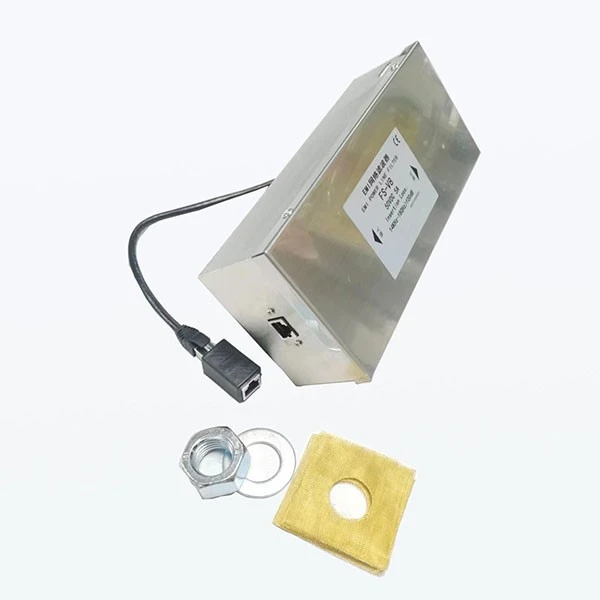
Now, let's take a look at some specific types of EMI filters. We've got Shielded Room Filters. These are designed to protect sensitive equipment in shielded rooms from external electromagnetic interference. The design challenge here is to ensure that the filter can handle high - power signals while still providing excellent attenuation. The filter has to be able to seal off the room effectively and prevent any leakage of electromagnetic waves.
Signal Line Filter is another important type. These filters are used to protect signal lines from EMI. The design has to be very precise because any distortion in the signal can affect the performance of the equipment. We need to make sure that the filter can remove the interference without altering the important parts of the signal.
Then there's the Ac Emc Filter. These filters are used in AC power systems to reduce electromagnetic interference. The challenge here is to handle the high - voltage and high - current nature of AC power. We have to design the filter to be robust enough to withstand the electrical stress while still providing good EMI attenuation.
When it comes to manufacturing, there are also challenges. The quality control during the manufacturing process is essential. Even a small variation in the component values can affect the filter's performance. We have to have strict quality control measures in place to ensure that every filter we produce meets the required specifications.
Thermal management is yet another aspect. EMI filters can generate heat, especially when they are handling high - power signals. If the heat is not dissipated properly, it can affect the performance and lifespan of the filter. We need to design the filter with proper heat - sinking mechanisms to keep the temperature within an acceptable range.
In terms of standards and regulations, there are a whole bunch of them. Different countries and industries have their own EMI standards. Our filters have to comply with these standards to be sold in the market. This means we have to stay updated with the latest standards and make sure our designs meet all the requirements.
So, as you can see, designing EMI filters is a complex process with many challenges. But at the same time, it's also a really rewarding field. We get to use our engineering skills to solve these problems and come up with innovative solutions.
If you're in the market for EMI filters and want to learn more about how we can meet your specific needs, feel free to reach out. We're always happy to have a chat and discuss potential solutions for your EMI filtering requirements.

References
- "Electromagnetic Compatibility Engineering" by Henry W. Ott
- "Handbook of Electromagnetic Compatibility" by Clayton R. Paul