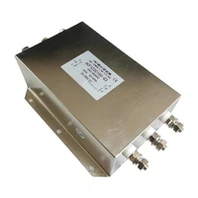
Hey there! As a supplier of RFI EMC filters, I get asked a lot about how to select the right filter based on the filter topology. It's a crucial decision, and I'm here to break it down for you in a way that's easy to understand.
First off, let's talk about what RFI EMC filters are. RFI stands for Radio Frequency Interference, and EMC is short for Electromagnetic Compatibility. These filters are designed to reduce or eliminate unwanted electromagnetic noise in electrical circuits. They're used in a wide range of applications, from consumer electronics to industrial equipment.
Now, when it comes to selecting an RFI EMC filter, the filter topology plays a huge role. The topology refers to the way the filter is configured, including the number and arrangement of components like capacitors, inductors, and resistors. Different topologies offer different levels of performance and are suitable for different types of applications.
One of the most common filter topologies is the single-stage filter. This type of filter consists of a single capacitor and inductor connected in series or parallel. Single-stage filters are relatively simple and cost-effective, making them a popular choice for many applications. They're great for reducing low-frequency noise and are often used in power supplies and small electronic devices.


However, if you need to filter out high-frequency noise or have more complex requirements, you might want to consider a multi-stage filter. Multi-stage filters have multiple stages of filtering, each designed to target a specific frequency range. This allows for more precise filtering and better overall performance. They're commonly used in applications where high levels of electromagnetic interference are present, such as in industrial machinery and telecommunications equipment.
Another important factor to consider when selecting a filter topology is the type of load the filter will be connected to. Different loads have different impedance characteristics, and the filter topology needs to be matched to the load to ensure optimal performance. For example, if you're filtering a high-impedance load, a filter with a high input impedance might be more suitable. On the other hand, if you're filtering a low-impedance load, a filter with a low output impedance might be a better choice.
Let's take a look at some specific types of RFI EMC filters and their topologies. One popular type is the 3 Phase Emc Filter. These filters are designed for three-phase electrical systems and are commonly used in industrial applications. They typically have a more complex topology than single-phase filters to handle the higher power and more complex electrical signals.
Another type is the Signal Line Filter. These filters are used to protect sensitive signal lines from electromagnetic interference. They often have a different topology than power filters, as they need to be designed to handle low-level signals without introducing too much attenuation.
And then there's the 3 Phase Filter. Similar to the 3 Phase Emc Filter, but with a slightly different design and performance characteristics. These filters are also used in three-phase systems and are designed to provide effective filtering of electromagnetic noise.
When selecting a filter topology, it's also important to consider the size and cost of the filter. Some topologies require more components and are therefore larger and more expensive. If you're working with a limited budget or have space constraints, you might need to choose a simpler topology.
In addition to the filter topology, there are other factors to consider when selecting an RFI EMC filter. These include the filter's insertion loss, which measures how much the filter reduces the electromagnetic interference, and the filter's frequency range, which determines the frequencies that the filter can effectively filter.
So, how do you go about selecting the right RFI EMC filter based on the filter topology? Here are some steps you can follow:
- Understand your application requirements: Determine the type of electromagnetic interference you need to filter, the frequency range of the interference, and the impedance of the load.
- Research different filter topologies: Learn about the different types of filter topologies and their characteristics. Consider the pros and cons of each topology and how they might apply to your application.
- Consult with a filter expert: If you're not sure which filter topology is right for your application, don't hesitate to reach out to a filter expert. They can help you analyze your requirements and recommend the best filter topology for your needs.
- Test the filter: Once you've selected a filter topology, it's a good idea to test the filter in your application to ensure that it meets your requirements. You can use specialized test equipment to measure the filter's performance and make any necessary adjustments.
In conclusion, selecting the right RFI EMC filter based on the filter topology is a critical decision that can have a significant impact on the performance of your electrical system. By understanding your application requirements, researching different filter topologies, consulting with a filter expert, and testing the filter, you can ensure that you choose the best filter for your needs.
If you're interested in learning more about RFI EMC filters or have any questions about selecting the right filter for your application, feel free to reach out to us. We're here to help you find the perfect filter solution for your needs.