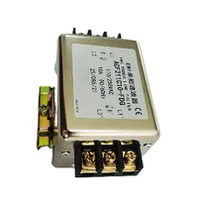
Hey there! As a supplier of 3 PHASE FILTERS, I know how crucial it is to ensure that these filters meet the standards. In this blog, I'll share some insights on how we can make sure our 3 PHASE FILTERS are up to par.
First off, let's understand what standards we're talking about. There are various industry standards that 3 PHASE FILTERS need to comply with. These standards are in place to ensure the safety, performance, and reliability of the filters. For example, there are electrical safety standards that govern the insulation resistance, dielectric strength, and leakage current of the filters. Then, there are electromagnetic compatibility (EMC) standards that aim to reduce electromagnetic interference (EMI) and radio frequency interference (RFI).
One of the key steps in ensuring that a 3 PHASE FILTER meets the standards is to start with high - quality components. The quality of the capacitors, inductors, and other parts used in the filter can significantly impact its performance. We always source our components from trusted suppliers. We do thorough inspections of the components when they arrive at our facility. This includes checking for any visible defects, measuring the electrical parameters of the components, and verifying their compliance with relevant standards.
During the manufacturing process, strict quality control measures are essential. We have a well - defined production line where each step is carefully monitored. For instance, when assembling the filter, we make sure that the components are properly soldered. Poor soldering can lead to loose connections, which can affect the electrical performance of the filter and even pose a safety hazard. We also have automated testing equipment that checks the electrical characteristics of the filter at various stages of production. This helps us catch any issues early on and make the necessary adjustments.
Another important aspect is testing the filter against the relevant standards. We have a dedicated testing laboratory where we perform a series of tests on our 3 PHASE FILTERS. For EMC testing, we use specialized equipment to measure the filter's ability to suppress EMI and RFI. This involves placing the filter in a controlled electromagnetic environment and measuring the amount of interference that passes through it. If the filter doesn't meet the required EMC standards, we go back to the drawing board and make design changes.
We also conduct electrical safety tests. These tests include measuring the insulation resistance between different parts of the filter. A low insulation resistance can indicate a potential short - circuit or electrical shock hazard. We also test the dielectric strength of the filter to ensure that it can withstand the specified voltage without breaking down.
Documentation is also a big part of ensuring compliance. We keep detailed records of every step of the manufacturing process, from the sourcing of components to the final testing results. This documentation serves as evidence that our filters meet the standards. It's also useful for traceability in case there are any issues with the filters in the future.
Let's talk a bit about some of the related products. If you're interested in other types of filters, we also offer Signal Line Filter, Shielded Room Filters, and Rfi Emc Filter. These filters have their own unique applications and standards, but the principles of ensuring compliance are similar.
In addition to internal testing, we also participate in third - party certification programs. Having third - party certification gives our customers an extra level of confidence in our products. These certification bodies conduct independent tests on our filters and issue certificates if the filters meet the required standards. This not only helps us in the domestic market but also opens up opportunities for international sales, as many countries require products to have certain certifications for import.
We also stay updated with the latest industry standards. Standards are constantly evolving as technology advances and new safety and performance requirements are identified. We have a team that monitors these changes and makes sure that our manufacturing processes and product designs are adjusted accordingly. This way, we can ensure that our 3 PHASE FILTERS remain compliant with the most current standards.
Training our employees is another vital part of the process. All our workers are trained on the importance of quality and compliance. They are taught how to handle the components properly, how to operate the manufacturing equipment, and how to conduct basic quality checks. Regular training sessions are held to keep the employees informed about any changes in the manufacturing process or standards.


When it comes to customer feedback, we take it very seriously. If a customer reports an issue with one of our 3 PHASE FILTERS, we investigate it immediately. We analyze the problem, determine the root cause, and take corrective actions. This could involve making changes to the manufacturing process, improving the quality control measures, or even redesigning the filter if necessary.
In conclusion, ensuring that a 3 PHASE FILTER meets the standards is a multi - step process that involves everything from sourcing high - quality components to staying updated with the latest industry requirements. At our company, we're committed to providing high - quality 3 PHASE FILTERS that meet all the relevant standards. If you're in the market for 3 PHASE FILTERS or any of our other filter products, we'd love to have a chat with you about your specific needs. We can work together to find the best solution for your application. So, don't hesitate to reach out for a procurement discussion.
References:
- Industry standards documents related to 3 PHASE FILTERS
- Technical literature from component suppliers
- Reports from third - party certification bodies