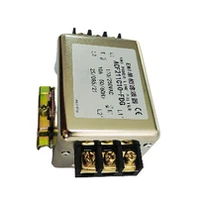
Hey there! As a supplier of Signal Line Filters, I've seen firsthand how temperature can throw a real curveball at these little devices. In this blog, I'm gonna break down how temperature affects the performance of a signal line filter and why it's super important to keep an eye on it.
The Basics of Signal Line Filters
Before we dive into the temperature stuff, let's quickly go over what a signal line filter does. Signal line filters are used to reduce electromagnetic interference (EMI) in electronic circuits. They work by blocking unwanted frequencies while allowing the desired ones to pass through. This is crucial in all sorts of applications, from consumer electronics to industrial equipment.
How Temperature Affects Resistance
One of the most direct ways temperature impacts a signal line filter is through its effect on resistance. Most materials used in filters, like resistors and conductors, have a property called temperature coefficient of resistance (TCR). This means that as the temperature changes, so does the resistance of the material.

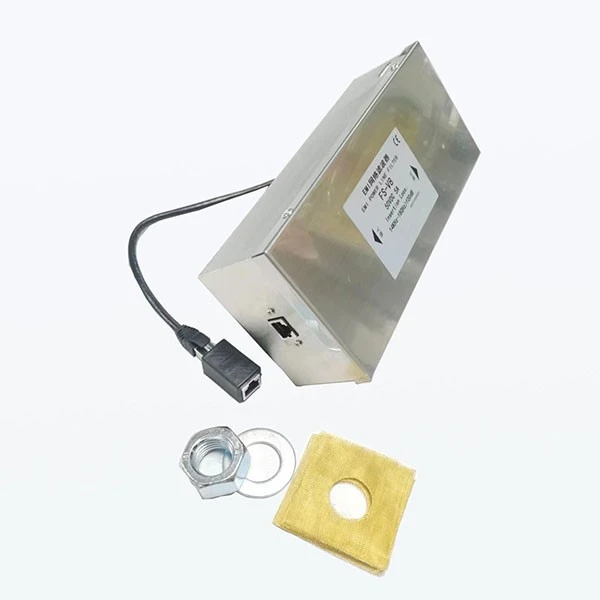
When the temperature goes up, the resistance of these materials usually increases. This can have a big impact on the filter's performance. For example, an increase in resistance can lead to a decrease in the filter's efficiency. It might not be able to block unwanted frequencies as effectively, or it could cause a drop in the strength of the desired signal.
On the other hand, when the temperature drops, the resistance decreases. This might seem like a good thing, but it can also cause problems. A sudden decrease in resistance can lead to over - current situations, which can damage the filter or other components in the circuit.
Capacitance and Temperature
Capacitors are another key component in signal line filters, and temperature can mess with their capacitance. Capacitance is basically the ability of a capacitor to store an electric charge.
As the temperature rises, the dielectric material inside the capacitor can change its properties. This can cause the capacitance to increase or decrease, depending on the type of dielectric used. A change in capacitance can shift the filter's frequency response. If the capacitance increases, the filter might start to block frequencies that it was originally supposed to pass through, and vice versa.
Inductance and Temperature
Inductors, which are used to store energy in a magnetic field, are also affected by temperature. The inductance of an inductor can change with temperature due to the expansion or contraction of the coil and the changes in the magnetic properties of the core material.
An increase in temperature can cause the coil to expand, which can change the spacing between the turns of the coil. This can lead to a decrease in inductance. A decrease in inductance can shift the filter's cutoff frequency, making it less effective at blocking unwanted frequencies.
Thermal Stress and Mechanical Damage
Temperature changes don't just affect the electrical properties of a signal line filter; they can also cause mechanical damage. When a filter is exposed to high temperatures, the different materials inside it expand at different rates. This can create thermal stress, which can lead to cracks in the components or the housing of the filter.
Over time, these cracks can get worse and eventually cause the filter to fail completely. Even small cracks can affect the filter's performance by changing the electrical characteristics of the components or allowing moisture and dust to enter the filter.
Applications and Temperature Considerations
Different applications have different temperature requirements for signal line filters. For example, in automotive applications, filters need to be able to withstand a wide range of temperatures, from the cold of winter to the heat under the hood. In aerospace applications, filters need to work reliably in extreme temperature conditions, both in the high - altitude cold and during re - entry when temperatures can soar.
In industrial settings, filters might be exposed to high temperatures due to the operation of machinery. In these cases, it's important to choose a filter that is designed to handle these conditions. That's where our Shielded Room Filters come in handy. They are designed to provide reliable performance even in challenging temperature environments.
Our Solutions for Temperature - Sensitive Applications
At our company, we understand the importance of temperature in the performance of signal line filters. That's why we offer a wide range of filters that are designed to handle different temperature conditions.
Our 3 Phase Emc Filter is a great choice for industrial applications where temperature can vary widely. It's built with high - quality materials that have stable electrical properties over a wide temperature range.
For applications that require a more compact and efficient filter, our Ac Emc Filter is a top - notch option. It's designed to maintain its performance even when the temperature fluctuates.
Conclusion
So, as you can see, temperature plays a huge role in the performance of a signal line filter. From affecting the electrical properties of components like resistance, capacitance, and inductance to causing mechanical damage, temperature can really make or break a filter's performance.
If you're in the market for a signal line filter, it's crucial to consider the temperature conditions in your application. And that's where we come in. We're here to help you find the right filter for your needs. Whether you're dealing with extreme temperatures in an industrial setting or just need a reliable filter for a consumer electronics product, we've got you covered.
If you're interested in learning more about our products or have any questions about how temperature affects signal line filters, don't hesitate to reach out. We're always happy to have a chat and help you make the best choice for your project. Let's start a conversation about your filter requirements and see how we can work together to solve your EMI problems.
References
- Smith, J. (2018). "Electromagnetic Interference Filter Design". Wiley.
- Jones, A. (2020). "Temperature Effects on Electronic Components". IEEE Journal of Electronics.