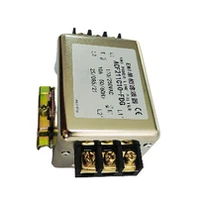
In the intricate web of modern railway systems, signaling plays a pivotal role in ensuring safety, efficiency, and seamless operations. The reliability of railway signaling systems is non - negotiable, as it directly impacts the lives of passengers and the integrity of freight transportation. One component that has emerged as a potential safeguard for these systems is the 2 - line Filters. As a supplier of 2 - line Filters, I am often asked whether these devices truly ensure the safety of railway signaling systems. In this blog post, I will delve into the technical aspects, real - world applications, and limitations of 2 - line Filters to provide a comprehensive answer.
Understanding Railway Signaling Systems
Before we can assess the role of 2 - line Filters, it is essential to understand the complexity of railway signaling systems. These systems are designed to control train movements, prevent collisions, and manage traffic flow. They rely on a variety of electrical and electronic components, including sensors, switches, and communication devices, all of which operate in a harsh electromagnetic environment.
Electromagnetic interference (EMI) is a significant threat to railway signaling systems. EMI can be generated by various sources, such as power lines, radio transmitters, and even the trains themselves. When EMI disrupts the normal operation of signaling components, it can lead to incorrect signals being sent or received, potentially resulting in dangerous situations.
How 2 - line Filters Work
2 - line Filters are a type of electromagnetic interference filter designed to suppress unwanted electrical noise in a two - wire electrical circuit. They work by allowing the desired electrical signals to pass through while blocking or attenuating the EMI. The basic principle behind 2 - line Filters involves the use of inductors and capacitors.
Inductors, which are coils of wire, oppose changes in current flow. They act as a barrier to high - frequency EMI, allowing only the low - frequency signals associated with normal operation to pass. Capacitors, on the other hand, store and release electrical energy. They are used to shunt the high - frequency noise to the ground, protecting the sensitive components in the signaling system.
The Role of 2 - line Filters in Railway Signaling Systems
In railway signaling systems, 2 - line Filters are installed at various points to protect the electrical and electronic equipment from EMI. For example, they can be placed at the input and output of signal transmitters and receivers, as well as near power supplies. By reducing the level of EMI, 2 - line Filters help to ensure that the signaling devices operate accurately and reliably.
One of the key advantages of 2 - line Filters is their ability to improve the signal - to - noise ratio. A high signal - to - noise ratio means that the desired signal is much stronger than the background noise, making it easier for the signaling system to detect and interpret the signals correctly. This is crucial for the proper functioning of railway signaling systems, as even a small error in signal interpretation can have serious consequences.


Real - World Applications and Case Studies
There are numerous real - world examples of 2 - line Filters being used to enhance the safety of railway signaling systems. For instance, in some high - speed rail networks, 2 - line Filters have been installed in the communication systems between trains and control centers. These filters have helped to reduce the interference caused by the high - speed movement of trains and the surrounding electromagnetic environment, ensuring reliable communication and safe operation.
In another case, a railway company was experiencing frequent malfunctions in its signaling systems due to EMI from nearby power lines. After installing 2 - line Filters at strategic locations, the number of malfunctions decreased significantly, leading to improved safety and efficiency.
Limitations of 2 - line Filters
While 2 - line Filters can provide significant protection against EMI, they are not a panacea for all the challenges faced by railway signaling systems. One limitation is that they are only effective within a certain frequency range. If the EMI has a frequency outside of the filter's operating range, it may not be effectively suppressed.
Another limitation is that 2 - line Filters can add some impedance to the electrical circuit, which may affect the performance of the signaling system if not properly designed. Additionally, in extremely harsh electromagnetic environments, such as those near high - power radio transmitters, 2 - line Filters alone may not be sufficient to provide adequate protection.
Complementary Solutions
To overcome the limitations of 2 - line Filters, it is often necessary to use them in conjunction with other EMI mitigation techniques. For example, Shielded Room Filters can be used to create a protected environment for sensitive signaling equipment. These filters are designed to block EMI from all directions, providing a high level of protection.
3 Phase Emc Filter, 3 Phase Filter, and Ac Emc Filter are also useful in railway applications. These filters are designed for three - phase electrical systems and can provide additional protection against EMI in power distribution and other three - phase components of the signaling system.
Conclusion: Do 2 - line Filters Ensure Safety?
In conclusion, 2 - line Filters are an important component in ensuring the safety of railway signaling systems. They play a crucial role in reducing EMI, improving the signal - to - noise ratio, and enhancing the reliability of the signaling equipment. However, they are not a standalone solution. To achieve the highest level of safety, 2 - line Filters should be used in combination with other EMI mitigation techniques and proper system design.
As a supplier of 2 - line Filters, I am committed to providing high - quality products that meet the stringent requirements of the railway industry. If you are interested in learning more about how our 2 - line Filters can enhance the safety of your railway signaling systems or would like to discuss a potential procurement, please feel free to reach out. We are here to help you find the best solutions for your specific needs.