Are there any EMI Filters for ultra - high - frequency applications?
In the realm of modern electronics, the management of electromagnetic interference (EMI) is of paramount importance, especially when dealing with ultra - high - frequency (UHF) applications. As an EMI filter supplier, I am frequently asked about the availability and effectiveness of EMI filters for UHF scenarios. In this blog, I will delve into the world of EMI filters for UHF applications, exploring their existence, characteristics, and significance.
Understanding Ultra - High - Frequency Applications
Ultra - high - frequency applications typically cover the frequency range from 300 MHz to 3 GHz. This range is widely used in various fields such as wireless communication (e.g., Wi - Fi, Bluetooth), radar systems, satellite communication, and some high - speed data transmission systems. In these applications, the signals are highly susceptible to EMI, which can degrade the performance of the electronic devices and even cause malfunctions.
The Need for EMI Filters in UHF Applications
EMI can be generated from a variety of sources, including power supplies, switching circuits, and other electronic components. In UHF applications, the high - frequency nature of the signals makes them more vulnerable to interference. EMI filters play a crucial role in suppressing these unwanted signals, ensuring the proper functioning of the electronic devices. They can prevent the leakage of electromagnetic energy from the device and also protect the device from external EMI sources.
Existence of EMI Filters for UHF Applications
Yes, there are indeed EMI filters specifically designed for UHF applications. These filters are engineered to operate effectively in the UHF frequency range. They are constructed using specialized materials and circuit designs to achieve high attenuation of unwanted EMI signals while allowing the desired UHF signals to pass through with minimal loss.
Characteristics of UHF EMI Filters
- High - frequency performance: UHF EMI filters are designed to have excellent performance in the UHF frequency range. They can provide high attenuation of EMI signals at frequencies up to several gigahertz.
- Low insertion loss: To ensure that the desired UHF signals are not significantly affected, these filters are designed with low insertion loss. This means that the filter will not cause a large reduction in the strength of the useful signals passing through it.
- Compact size: In many UHF applications, space is a premium. UHF EMI filters are often designed to be compact, allowing them to be easily integrated into small electronic devices.
Types of UHF EMI Filters
- Passive filters: Passive EMI filters are the most common type used in UHF applications. They are made up of passive components such as inductors, capacitors, and resistors. These components work together to form a filter circuit that can attenuate unwanted EMI signals. For example, a capacitor can be used to bypass high - frequency noise to ground, while an inductor can block high - frequency currents.
- Active filters: Active EMI filters use active components such as operational amplifiers in addition to passive components. They can provide better performance in terms of attenuation and frequency response compared to passive filters. However, they are generally more complex and expensive.
Applications of UHF EMI Filters
- Wireless communication devices: UHF EMI filters are widely used in wireless communication devices such as smartphones, tablets, and wireless routers. They help to ensure the quality of the wireless signals by suppressing EMI from other electronic components in the device.
- Radar systems: Radar systems operate in the UHF frequency range and are highly sensitive to EMI. EMI filters are used to protect the radar receivers from external interference and to prevent the leakage of electromagnetic energy from the radar transmitters.
- Satellite communication systems: In satellite communication, the signals are transmitted and received at UHF frequencies. EMI filters are used to ensure the reliability of the communication link by reducing the impact of EMI on the satellite transponders and ground stations.
Our Product Offerings
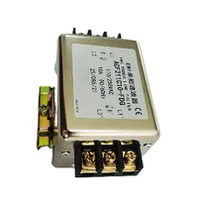
As an EMI filter supplier, we offer a wide range of EMI filters suitable for UHF applications. Our product portfolio includes 3 Phase Emc Filter, Shielded Room Filters, and Rfi Emc Filter. These filters are designed to meet the high - performance requirements of UHF applications and are manufactured using the latest technologies and high - quality materials.
The Importance of Choosing the Right EMI Filter
Selecting the right EMI filter for UHF applications is crucial. The wrong filter can not only fail to provide the desired EMI suppression but also cause additional problems such as signal distortion. When choosing an EMI filter, several factors need to be considered, including the frequency range, insertion loss, attenuation requirements, and the physical size of the filter.


How to Select the Right EMI Filter for UHF Applications
- Frequency range: The filter should be designed to operate within the UHF frequency range of your application. Make sure to check the filter's frequency response curve to ensure that it provides adequate attenuation at the frequencies of interest.
- Insertion loss: A low insertion loss is desirable to minimize the impact on the desired UHF signals. Look for filters with low insertion loss specifications.
- Attenuation requirements: Determine the level of EMI attenuation required for your application. This will depend on the nature of the EMI sources and the sensitivity of the electronic device.
- Physical size: Consider the available space in your device when choosing an EMI filter. Make sure that the filter can be easily installed and integrated into your system.
Conclusion
In conclusion, there are indeed EMI filters available for ultra - high - frequency applications. These filters play a vital role in ensuring the proper functioning of electronic devices in the UHF frequency range. As an EMI filter supplier, we are committed to providing high - quality EMI filters that meet the diverse needs of our customers. If you are looking for EMI filters for your UHF applications, we encourage you to contact us for more information and to discuss your specific requirements. We look forward to working with you to find the best EMI filter solutions for your projects.