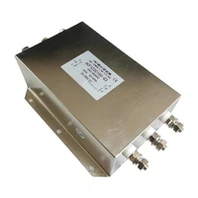
Radiation emission from a signal line filter is a crucial topic that concerns many industries, especially those dealing with electronic devices and communication systems. As a supplier of signal line filters, we understand the importance of providing high - quality products with low radiation emission to meet the strict electromagnetic compatibility (EMC) requirements.
Understanding Signal Line Filters
Signal line filters are designed to suppress electromagnetic interference (EMI) and radio - frequency interference (RFI) in signal lines. They work by allowing the desired signals to pass through while attenuating unwanted noise and interference. These filters are commonly used in a wide range of applications, including telecommunications, automotive, aerospace, and industrial control systems.
The basic principle of a signal line filter is based on the combination of passive components such as resistors, capacitors, and inductors. Capacitors are used to shunt high - frequency noise to ground, while inductors are used to block high - frequency currents. Resistors can be used to dampen oscillations and control the filter's frequency response.


Sources of Radiation Emission from Signal Line Filters
There are several sources of radiation emission from signal line filters. One of the primary sources is the magnetic fields generated by the inductors in the filter. Inductors store energy in a magnetic field, and when the current through the inductor changes, the magnetic field also changes. This changing magnetic field can radiate electromagnetic energy into the surrounding environment.
Another source of radiation emission is the electric fields generated by the capacitors in the filter. Capacitors store energy in an electric field, and high - frequency voltage variations across the capacitor can cause the electric field to radiate. Additionally, the inter - component coupling within the filter can also lead to radiation emission. For example, the mutual inductance between adjacent inductors or the capacitive coupling between different parts of the filter circuit can transfer energy and cause unwanted radiation.
Measuring Radiation Emission
To ensure that signal line filters meet the required EMC standards, it is necessary to measure their radiation emission. The most common method for measuring radiation emission is the use of an anechoic chamber. An anechoic chamber is a specially designed room with absorbing materials on the walls, ceiling, and floor to minimize reflections of electromagnetic waves.
Inside the anechoic chamber, the filter under test is placed on a test table, and a receiving antenna is used to measure the radiated electromagnetic fields at different frequencies. The measurement results are then compared with the relevant EMC standards, such as CISPR (International Special Committee on Radio Interference) standards or FCC (Federal Communications Commission) regulations.
Another method for measuring radiation emission is the use of a near - field probe. A near - field probe can be used to measure the magnetic and electric fields in the vicinity of the filter. This method is useful for identifying the specific sources of radiation emission within the filter and for troubleshooting purposes.
Factors Affecting Radiation Emission
Several factors can affect the radiation emission from a signal line filter. The first factor is the design of the filter. A well - designed filter with proper component selection and layout can minimize radiation emission. For example, using shielded inductors can reduce the magnetic field radiation, and proper grounding and decoupling techniques can reduce the electric field radiation.
The operating frequency of the filter also has a significant impact on radiation emission. Generally, higher - frequency signals are more likely to radiate than lower - frequency signals. Therefore, filters designed for high - frequency applications need to be carefully designed to minimize radiation emission.
The quality of the components used in the filter is another important factor. Low - quality components may have higher parasitic capacitance and inductance, which can increase radiation emission. Using high - quality, low - loss components can help reduce radiation emission.
Our Product Offerings
As a leading supplier of signal line filters, we offer a wide range of products to meet the diverse needs of our customers. Our product portfolio includes Ac Emc Filter, Rfi Emc Filter, and Shielded Room Filters.
Our AC EMC filters are designed to suppress EMI in AC power lines. They are suitable for a variety of applications, including power supplies, industrial equipment, and household appliances. These filters are carefully designed to provide high attenuation of common - mode and differential - mode noise while minimizing radiation emission.
Our RFI EMC filters are specifically designed to suppress RFI in signal lines. They are commonly used in communication systems, such as wireless routers, mobile phones, and satellite communication equipment. These filters can effectively block unwanted RFI signals and ensure the normal operation of the communication systems.
Our shielded room filters are used in shielded rooms to prevent the leakage of electromagnetic waves. They are essential for applications that require high - level electromagnetic shielding, such as military facilities, research laboratories, and data centers.
Minimizing Radiation Emission in Our Products
We are committed to providing products with low radiation emission. To achieve this goal, we adopt several measures in our product design and manufacturing process.
First, we use advanced simulation tools to optimize the filter design. These tools allow us to analyze the electromagnetic fields within the filter and predict the radiation emission. By adjusting the component values and layout, we can minimize the radiation emission while maintaining the desired filter performance.
Second, we use high - quality components in our products. We source our components from reliable suppliers and conduct strict quality control tests to ensure that they meet our high - standards. High - quality components have lower parasitic effects, which can reduce radiation emission.
Third, we pay attention to the manufacturing process. We use advanced manufacturing techniques to ensure the accuracy and consistency of our products. For example, we use automated assembly lines to ensure that the components are placed precisely, which can reduce the inter - component coupling and radiation emission.
Importance of Low Radiation Emission
Low radiation emission from signal line filters is of great importance for several reasons. First, it helps to meet the EMC requirements. Many countries and regions have strict EMC regulations that limit the radiation emission of electronic devices. By using our low - radiation - emission signal line filters, our customers can ensure that their products comply with these regulations and avoid potential legal issues.
Second, low radiation emission can improve the performance of electronic systems. Radiation emission from signal line filters can interfere with other electronic devices in the vicinity, causing malfunctions or degraded performance. By reducing radiation emission, we can minimize such interference and ensure the stable operation of the electronic systems.
Contact Us for Procurement
If you are interested in our signal line filters or have any questions about radiation emission, please feel free to contact us. We have a professional sales team that can provide you with detailed product information and technical support. We are also willing to work closely with you to develop customized solutions to meet your specific requirements.
References
- Ott, H. W. (2009). Electromagnetic Compatibility Engineering. Wiley - Interscience.
- Schmitt, R. L. (2002). Electromagnetic Compatibility in Practice. Newnes.
- CISPR Standards. International Special Committee on Radio Interference.
- FCC Regulations. Federal Communications Commission.