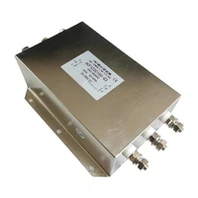
In the realm of electrical engineering and power systems, three - phase filters play a crucial role in ensuring the smooth and efficient operation of electrical equipment. As a trusted 3 - phase filter supplier, I am often asked about the communication interface of a 3 - phase filter. In this blog, I will delve into the details of what the communication interface of a 3 - phase filter is, its significance, and the different types available.
Understanding the Basics of 3 - Phase Filters
Before we jump into the communication interface, let's briefly understand what a 3 - phase filter is. A 3 - phase filter is designed to suppress electromagnetic interference (EMI) in three - phase electrical systems. These systems are commonly used in industrial applications, commercial buildings, and large - scale power distribution networks. The filter works by attenuating unwanted electrical noise, which can be caused by various sources such as motors, inverters, and other non - linear loads. This helps in improving the power quality, reducing the risk of equipment malfunction, and ensuring compliance with electromagnetic compatibility (EMC) standards.
The Need for a Communication Interface
In modern electrical systems, the ability to monitor and control devices remotely is becoming increasingly important. A communication interface in a 3 - phase filter allows for real - time monitoring of the filter's performance, status, and diagnostic information. It also enables remote control of the filter's settings, such as adjusting the filtering parameters or enabling/disabling certain functions. This is particularly useful in large - scale industrial plants where multiple filters are installed across different locations. Operators can access the filter data from a central control room, which helps in optimizing the system performance, reducing maintenance costs, and improving overall efficiency.
Types of Communication Interfaces in 3 - Phase Filters
Modbus
Modbus is one of the most widely used communication protocols in industrial automation. It is a serial communication protocol that allows for the exchange of data between different devices over a network. In the context of 3 - phase filters, Modbus can be used to communicate with the filter's internal controller. Through Modbus, operators can read various parameters such as input and output voltage, current, power factor, and temperature. They can also write commands to the filter, such as setting the filter's cut - off frequency or enabling a specific filtering mode. The simplicity and widespread adoption of Modbus make it a popular choice for 3 - phase filter communication interfaces.
Ethernet
Ethernet has become the standard for high - speed data communication in many industries. A 3 - phase filter with an Ethernet communication interface can be connected to a local area network (LAN) or the internet. This allows for seamless integration with other network - enabled devices, such as supervisory control and data acquisition (SCADA) systems. With Ethernet, operators can access the filter's data from anywhere in the world, provided they have the appropriate network access. The high data transfer rate of Ethernet enables real - time monitoring and control of the filter, even in complex industrial environments.
Profibus
Profibus is another industrial communication protocol commonly used in manufacturing and process automation. It is a fieldbus system that allows for the connection of multiple devices in a decentralized control system. In a 3 - phase filter, a Profibus interface enables communication with other devices on the same network, such as programmable logic controllers (PLCs). This integration allows for coordinated control and monitoring of the entire electrical system, improving the overall reliability and efficiency of the plant.
Advantages of Having a Communication Interface in 3 - Phase Filters
Predictive Maintenance
With real - time monitoring capabilities provided by the communication interface, operators can detect early signs of filter degradation or malfunction. By analyzing the historical data and trends, they can predict when maintenance is required, which helps in avoiding unexpected downtime and reducing repair costs. For example, if the temperature of the filter starts to rise steadily, it could indicate a problem with the internal components. The communication interface allows for timely alerts to be sent to the maintenance team, enabling them to take proactive measures.
Energy Management
Monitoring the power consumption and performance of the 3 - phase filter can provide valuable insights into the overall energy efficiency of the electrical system. Operators can use the data collected through the communication interface to optimize the filter's settings and reduce energy waste. For instance, if the filter is operating at a higher capacity than necessary, the settings can be adjusted to lower the energy consumption without compromising the filtering performance.


System Integration
A communication interface in a 3 - phase filter facilitates seamless integration with other electrical and control systems. This allows for a more comprehensive and coordinated approach to system management. For example, the filter can be integrated with a building management system (BMS) to ensure that the electrical system operates in harmony with other building systems, such as HVAC and lighting.
Our Product Offerings
As a 3 - phase filter supplier, we offer a range of filters with different communication interfaces to meet the diverse needs of our customers. Our Ac Emc Filter products are designed to provide effective EMI suppression in single - phase and three - phase AC systems. They come with options for Modbus, Ethernet, and Profibus communication interfaces, allowing for easy integration into existing industrial networks.
Our 3 Phase Emc Filter series is specifically tailored for three - phase applications. These filters are equipped with advanced communication capabilities, enabling real - time monitoring and control of the filter's performance. Whether you need to monitor the filter's status in a small factory or a large industrial complex, our 3 - phase EMC filters can provide the solution.
In addition, our Shielded Room Filters are designed for applications where high - level EMI protection is required, such as in shielded rooms or test facilities. These filters also feature communication interfaces, allowing for remote monitoring and control of the shielding effectiveness.
Contact Us for Procurement
If you are interested in purchasing 3 - phase filters with advanced communication interfaces, we would be delighted to discuss your requirements. Our team of experts can provide you with detailed product information, technical support, and pricing. We can also help you choose the right filter and communication interface based on your specific application and system requirements. Whether you are looking for a single filter for a small project or a large - scale deployment for an industrial plant, we have the solutions to meet your needs.
References
- "Industrial Communication Networks: Principles and Applications" by Peter Welti
- "Electromagnetic Compatibility Engineering" by Henry W. Ott
- "Modbus Protocol Specification" by Schneider Electric