

Hey there! As a supplier of 3 PHASE AC FILTERS, I'm super stoked to chat with you about the technical parameters of these nifty devices. They're pretty important if you're in the market for one, so let's jump right in.

First off, let's talk about the rated voltage. This is a key parameter. The rated voltage of a 3 PHASE AC FILTER is the maximum voltage that the filter can handle continuously without any issues. It's usually specified in volts (V). For example, we might have filters with rated voltages of 230V, 400V, or even higher, depending on the application. If you hook up a filter to a voltage source that's higher than its rated voltage, well, that's a recipe for disaster. It could lead to overheating, component failure, and all sorts of other problems. So, make sure you choose a filter with a rated voltage that matches your power supply.
Next up is the rated current. This is how much electrical current the filter can carry under normal operating conditions. It's measured in amperes (A). You've got to consider the load current of your system when picking a filter. If your load draws a lot of current, you'll need a filter with a high rated current. Otherwise, the filter might get overloaded, and that's not good news. For industrial applications where there are big motors and heavy machinery, you'll often need filters with high rated currents. On the other hand, for smaller, less power - hungry systems, a lower rated current filter will do the trick.
Another crucial parameter is the frequency. 3 PHASE AC FILTERS are designed to work at specific frequencies. In most parts of the world, the standard frequency for AC power is either 50Hz or 60Hz. You need to make sure that the filter you choose is compatible with the frequency of your power grid. Using a filter with the wrong frequency can result in poor performance and might even damage the filter or the connected equipment.
Now, let's move on to the insertion loss. This is a measure of how well the filter can reduce electromagnetic interference (EMI). Insertion loss is expressed in decibels (dB). A higher insertion loss means that the filter is better at blocking unwanted signals. We usually test insertion loss at different frequencies because EMI can occur across a wide range of frequencies. For example, we might test at frequencies from 10kHz to 30MHz. When you're looking for a filter, you want one with a high insertion loss at the frequencies where you're experiencing EMI problems. If you're dealing with high - frequency interference, look for a filter that has a good insertion loss in the high - frequency range.
The leakage current is also an important parameter. Leakage current is the small amount of current that flows through the filter to the ground. It's measured in milliamperes (mA). In some applications, especially those related to safety - critical systems, you need to keep the leakage current as low as possible. For example, in medical equipment, excessive leakage current can be a serious safety hazard. So, when choosing a filter for such applications, pay close attention to the leakage current specification.
The attenuation characteristics are closely related to the insertion loss. Attenuation describes how much the filter reduces the amplitude of the unwanted signals. It's often presented as a graph that shows how the attenuation changes with frequency. A good filter will have a steep attenuation slope in the frequency range where you want to block the interference. This means that it can quickly reduce the strength of the unwanted signals as the frequency increases.
The filter's impedance is another factor to consider. Impedance is a measure of the opposition that the filter presents to the flow of electrical current. It's a complex quantity that includes both resistance and reactance. The impedance of the filter should match the impedance of the source and the load for optimal performance. If there's a mismatch, it can lead to reflections and reduced effectiveness of the filter.
Now, let me tell you about some of the different types of 3 PHASE AC FILTERS we offer. We've got Shielded Room Filters. These are specifically designed for use in shielded rooms, where you need to prevent EMI from entering or leaving the room. They're built to be highly effective at blocking a wide range of frequencies and are often used in sensitive testing environments.
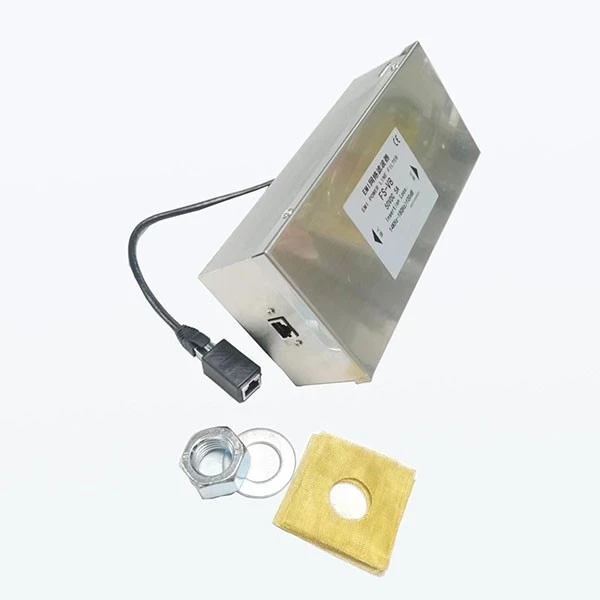
Then there are EMI/rfi Power Line Filter. These filters are used to protect electrical equipment from EMI and radio - frequency interference (RFI) that can come through the power lines. They're very common in industrial and commercial applications, where there are lots of electrical devices that can generate or be affected by interference.
We also have 4 - line Filters. These filters are suitable for applications where you need to filter four - wire power systems. They offer additional protection and can be used in a variety of settings, from data centers to manufacturing plants.
If you're in the market for a 3 PHASE AC FILTER, I'd love to help you find the right one for your needs. Whether you're dealing with a small - scale project or a large industrial installation, we've got the expertise and the products to meet your requirements. Just reach out, and we can start discussing the technical details and find the perfect filter for you.
In conclusion, understanding the technical parameters of a 3 PHASE AC FILTER is crucial for making the right choice. From rated voltage and current to insertion loss and leakage current, each parameter plays a vital role in the filter's performance. And with the different types of filters we offer, like Shielded Room Filters, EMI/rfi Power Line Filter, and 4 - line Filters, you're sure to find a solution that fits your specific situation. So, don't hesitate to get in touch if you have any questions or if you're ready to start the procurement process.
References
- "Electromagnetic Compatibility Engineering" by Henry W. Ott
- Industry standards and guidelines for electrical filters


